

Gan Cao Licorice Root — 1 lb Disc-Cut Chinese Licorice
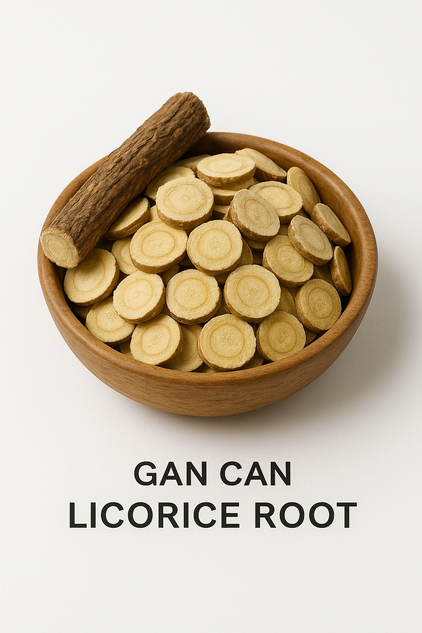
Need traditional Gan Cao in actual cut-root form? This ActiveHerb product is 100% Glycyrrhiza uralensis root, dried and sliced into convenient discs for traditional herbal formulas and decoctions.
This is genuine Chinese licorice root — not DGL, candy flavoring, powder, capsules, extract, or honey-prepared Zhi Gan Cao.
Nothing else added
Easy to identify and strain
16 oz / approximately 454 g
Quality-controlled botanical
Why Choose This Gan Cao?
Not every product labeled “licorice” is the same. Shoppers may encounter DGL licorice, powders, extracts, candy flavorings, prepared Zhi Gan Cao, and several botanical species.
Gan Cao Product Details at a Glance
Chinese herbs are often sold under several different names. Checking the Pin Yin name, botanical name, plant part, and form helps make sure you are ordering the correct botanical.
| Pin Yin Name | Gan Cao |
| Chinese Name | 甘草 |
| Common Names | Licorice Root, Chinese Licorice Root, Sweet Root |
| Botanical Name | Glycyrrhiza uralensis |
| Plant Part | Root |
| Form | Disc Cut / Sliced Root |
| Package Size | 1 Pound (16 oz / approximately 454 g) |
| Brand | ActiveHerb |
| Origin | China |
| Ingredients | 100% Licorice Root — Nothing Else Added |
What Is Gan Cao?
Gan Cao is the Pin Yin name commonly used for licorice root in Chinese herbal practice. This particular product is specifically Glycyrrhiza uralensis, commonly called Chinese Licorice.
The portion used is the dried root. When the root is sliced crosswise, the pieces typically show a lighter yellow-tan interior surrounded by a somewhat darker outer layer.
Licorice root naturally contains numerous constituents, including glycyrrhizin, liquiritin, isoliquiritin, and other flavonoids. Glycyrrhizin contributes substantially to the root's characteristic sweetness.
Gan Cao has a long history in Chinese herbal traditions and appears in many classical multi-herb formulas.
Why Is Gan Cao Called “The Great Harmonizer”?
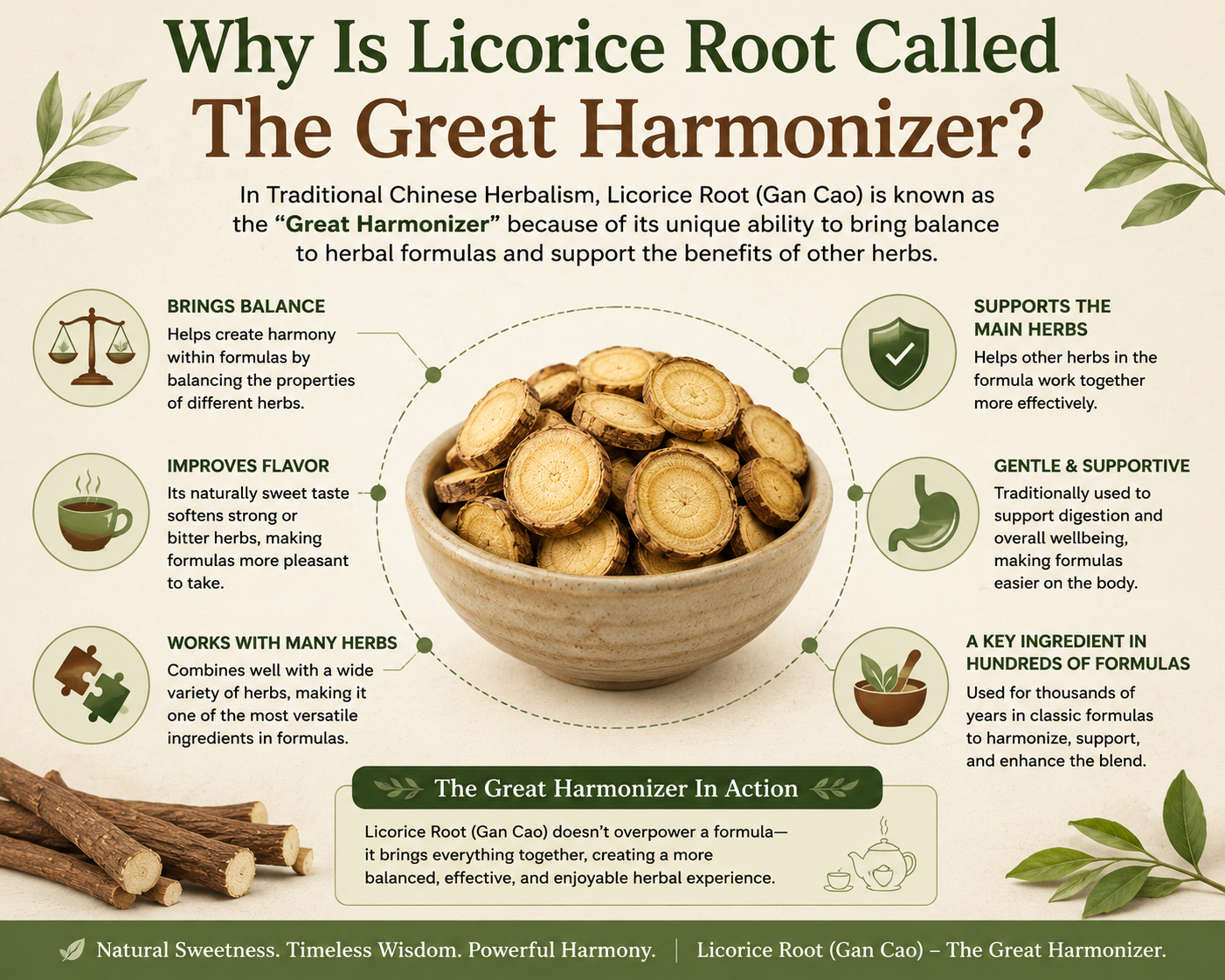
Traditional Chinese herbal formulas commonly contain several ingredients serving different roles. Gan Cao is frequently included in a supporting role and is traditionally described as helping to “harmonize” the other herbs within a formula.
Its natural sweetness also has a practical effect: it can soften the taste of preparations containing strongly flavored roots, barks, and other botanicals.
Traditional Chinese Herbal Perspective
Sweet
Neutral
Heart, Lung, Spleen & Stomach
Within Traditional Chinese Herbalism, Gan Cao is traditionally described as tonifying Qi, supporting traditional Spleen patterns, moistening the Lung, moderating spasms and discomfort, clearing heat, and harmonizing herbs within a formula.
Traditional properties and uses describe concepts within the historical Chinese herbal system. They are not claims that this product diagnoses, treats, cures, or prevents disease.
Is This Gan Cao or Zhi Gan Cao?
This product is Gan Cao — dried, unprepared licorice root.
Zhi Gan Cao is a traditionally processed form of licorice root, commonly associated with honey preparation.
If your formula specifically calls for Zhi Gan Cao, the two forms should not automatically be substituted for one another.
What Should Good-Quality Gan Cao Look Like?
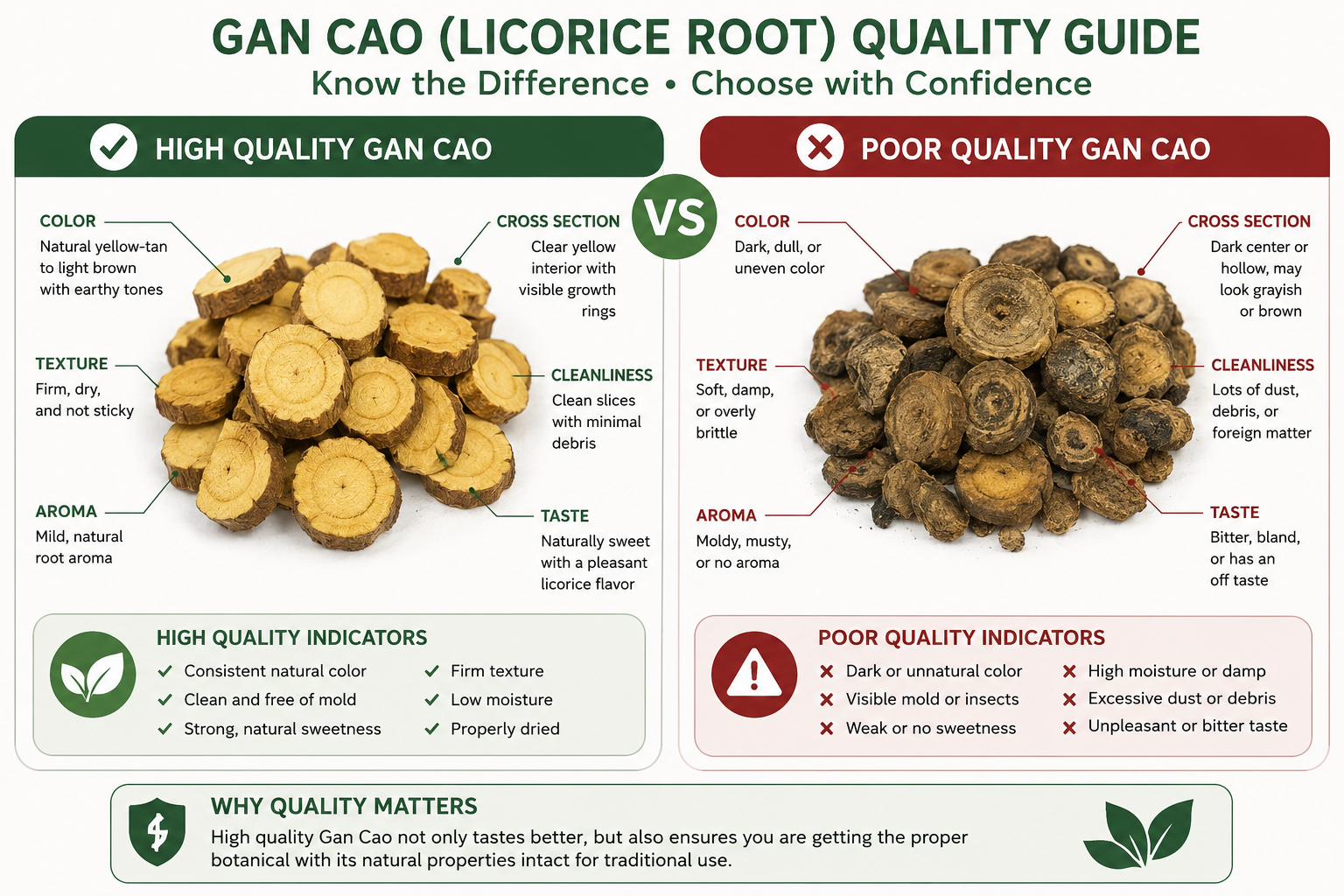
One advantage of disc-cut Gan Cao is that you can visually examine the root instead of relying entirely on an unidentified powder.
Natural tan, yellow-tan, golden-brown, or light brown tones.
A lighter-colored interior with visible natural root structure.
Firm and dry rather than damp, soft, or sticky.
Distinctly sweet with an earthy root character.
Do not expect perfectly identical discs. Roots naturally grow at different diameters, so sliced pieces vary in size, shape, and color.
Natural botanical variation is normal and is not automatically a sign of poor quality.
Why Choose Disc-Cut Gan Cao Instead of Powder?
Neither form is automatically better. The right form depends on the preparation you are following.
| Form | Key Advantage | Best For |
|---|---|---|
| Disc Cut | Visible botanical identity; easy to strain | Traditional decoctions and formulas |
| Powder | Already finely ground | Preparations specifically calling for whole-root powder |
| Extract | Concentrated preparation | When a particular extract is required |
For traditional water decoctions, disc-cut root is practical because it is already sliced and easy to strain.
How Do You Prepare Disc-Cut Gan Cao?
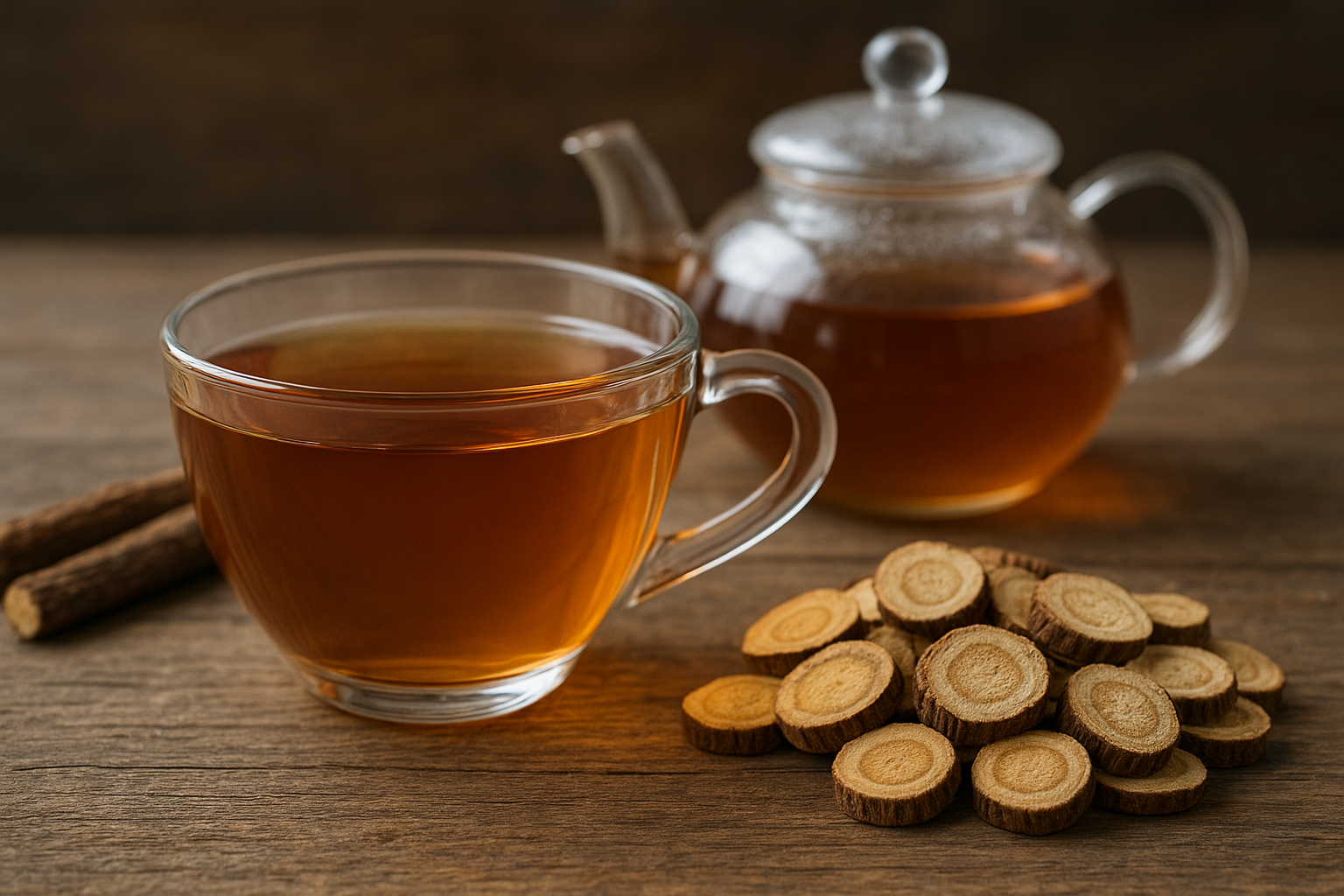
Gan Cao is traditionally prepared by decoction. Decoction differs from simply steeping an ordinary tea bag because roots are typically simmered in water.
- Measure the amount specified by your practitioner or traditional formula.
- Add the herbs and water to a non-reactive pot.
- Bring to a boil and reduce the heat.
- Gently simmer according to the directions for your particular formula.
- Strain the botanical material before serving.
Because Gan Cao is often one ingredient in a larger traditional formula, there is no single preparation amount appropriate for every customer or every formula.
What Does Real Licorice Root Taste Like?
Gan Cao is unusually sweet for a dried root. Its sweetness can linger on the palate and is accompanied by a mild earthy and woody character.
If you are expecting the flavor of a black licorice jelly bean, genuine licorice root may surprise you. Commercial licorice candy may contain sugar, starches, anise flavoring, and other ingredients.
Bitterness: Low
Earthiness: Mild to moderate
Aroma: Mild, characteristic dried root
How Is ActiveHerb Gan Cao Tested?
Appearance is only one part of evaluating bulk herbs. Botanical identity and contaminant testing matter as well.
ActiveHerb reports quality-control testing that includes:
- Botanical identity testing
- Heavy metal testing
- Pesticide testing
- Microbial testing
- Active constituent testing
Gan Cao Frequently Asked Questions
Is this DGL licorice?
No. This is traditional whole licorice root. DGL is a specially processed licorice product from which most glycyrrhizin has been removed.
Does this Gan Cao contain added sugar?
No sweetener is added. Licorice root's characteristic sweetness is associated with naturally occurring constituents such as glycyrrhizin.
Is this Zhi Gan Cao?
No. This product is Gan Cao, the dried unprepared root. Zhi Gan Cao is a traditionally processed licorice preparation commonly associated with honey processing.
Can I eat the dried slices?
This product is sold as a bulk botanical for traditional herbal preparation. Follow your practitioner's directions or the preparation method appropriate to your formula rather than treating the slices as snack food.
Why are some slices larger than others?
Licorice roots grow at different diameters. Disc cutting naturally produces pieces of varying sizes and shapes.
How should I store Gan Cao?
Keep the package tightly sealed in a cool, dry location away from moisture, excessive heat, and direct sunlight. Use clean, dry utensils when handling dried herbs.
Is Gan Cao the same as black licorice candy?
No. Gan Cao is dried botanical licorice root. Licorice candy is a manufactured food that may contain sugar, starches, anise flavoring, or other ingredients.
What Is Modern Science Studying About Licorice Root?
Modern researchers have identified numerous naturally occurring compounds in licorice root. Two major areas of interest are triterpenoid saponins such as glycyrrhizin and a variety of flavonoids.
These compounds have been investigated in laboratory, animal, and human research. Research into an isolated plant constituent does not automatically establish that bulk licorice root treats a particular disease.
For evidence-based information, customers can review research in the National Library of Medicine / PubMed and safety information from the National Center for Complementary and Integrative Health (NCCIH).
Important Gan Cao Safety Information
This is whole Licorice Root, not DGL, and it naturally contains glycyrrhizin.
Excessive or prolonged intake of glycyrrhizin-containing licorice can cause significant adverse effects in susceptible individuals.
Potential concerns include increased blood pressure, decreased potassium, fluid retention, and changes in heart rhythm.
Consult an appropriate healthcare professional before using Licorice Root if you:
- Have high blood pressure.
- Have heart or cardiovascular disease.
- Have kidney disease.
- Have low potassium or another electrolyte disorder.
- Are pregnant or breastfeeding.
- Take prescription medications, particularly medicines affecting blood pressure, potassium, fluid balance, heart rhythm, or corticosteroids.
More is not necessarily better. Follow the amount and duration recommended by your qualified healthcare professional or trained herbal practitioner. Keep out of reach of children.
Need Gan Cao in Traditional Cut-Root Form?
This ActiveHerb product gives you 100% Glycyrrhiza uralensis root, disc cut, 1 pound, with nothing else added.
If your traditional formula calls for Gan Cao rather than DGL, powder, extract, or Zhi Gan Cao, this is the form to consider.
Trusted Since 1994 • Lab Tested • Ships From Washington State
Research & References
National Center for Complementary and Integrative Health (NCCIH) — Licorice Root: Usefulness and Safety.
National Library of Medicine / PubMed — Scientific literature concerning Glycyrrhiza uralensis, licorice constituents, glycyrrhizin, and related research.
Traditional Chinese herbal information is provided for educational and historical reference.
PubMed Central Research Reference
PubMed Research Reference
PubMed Research Reference