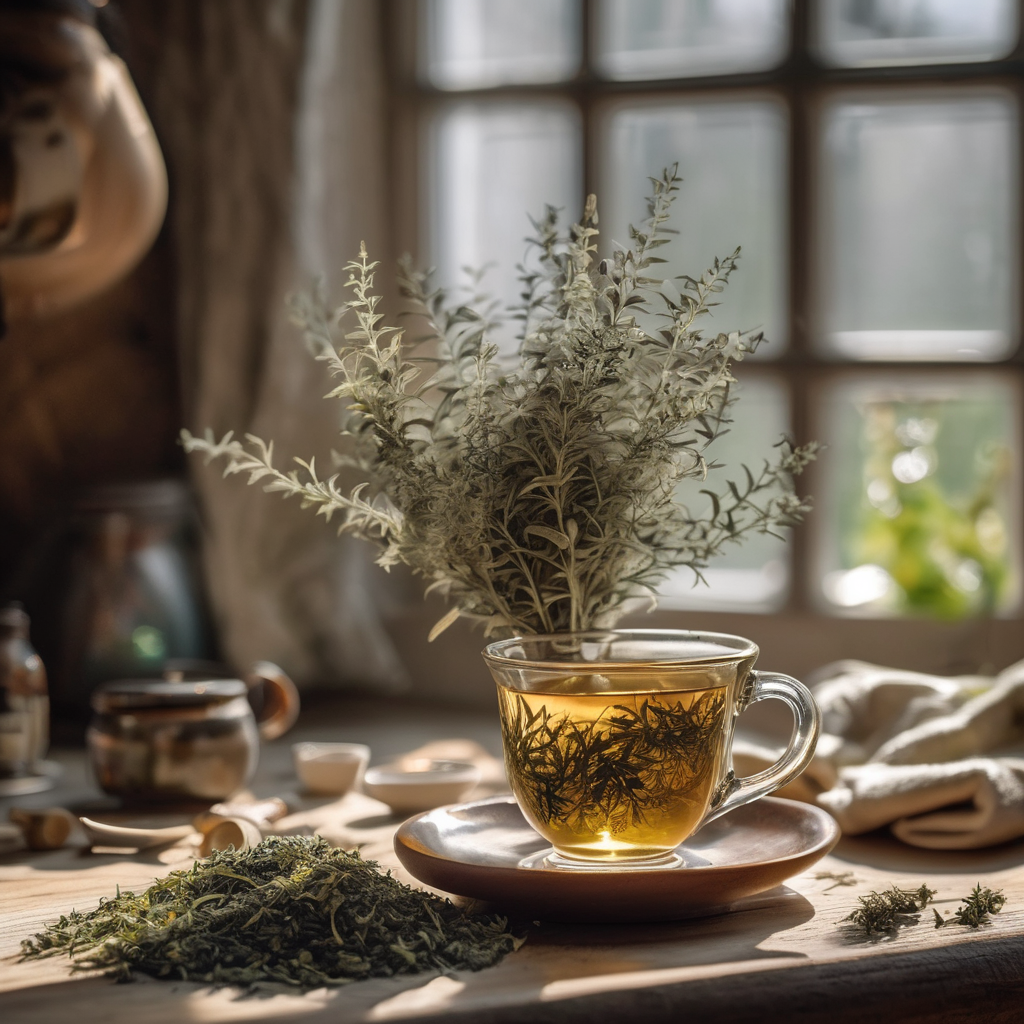
Qing Hao A Traditional Chinese Herb

Qing Hao (青蒿) — Artemisia annua (Sweet Wormwood) Cut Herb

artemisia annua brewing teaA classic Chinese herb traditionally used to clear summer-heat and clear deficient-heat patterns (the “low-grade, lingering warmth” style of heat).
TCM Nature/Taste: Cold, Bitter

Traditional focus: Summer-heat; Deficient-heat (“steaming” heat)

Typical decoction guidance: 3–9g, often added at the end

Form: Cut / c/s (aerial parts)

Quality promise: Clean handling, identity-focused sourcing, careful storage

Trusted Since 1994 Quality-Screened Lab-Tested

Educational information only. Herbs are not intended to diagnose, treat, cure, or prevent any disease. If you are pregnant, nursing, have a medical condition, or take medications, consult a qualified clinician before use.

Jump to What You Need

Qing hoa in bulk form.

What Is Qing Hao?

Qing Hao (青蒿) refers to the aerial herb of Artemisia annua, commonly called Sweet Wormwood (also known as “Sweet Annie” in some regions). In Traditional Chinese Medicine, it’s best known for clearing certain heat patterns—especially summer-heat and deficient-heat.

This is a “pattern herb.” That means it’s most useful when the overall presentation matches the traditional pattern description—not simply because someone feels warm on a random Tuesday.

Quick Facts About Qing Hao 

Botanical Name

Artemisia annua

Common Names

Sweet Wormwood, Sweet Annie

TCM Nature / Taste

Cold / Bitter

Traditional Actions

Clears summer-heat; clears deficient-heat (classic use)

Typical Decoction Range

3–9g (often added late)

Traditional Contraindication

Use caution with Spleen/Stomach deficiency-cold patterns

TCM Pattern Guide: When Qing Hao Makes Sense

1) “Summer-Heat” patterns

Summer-heat tends to feel like heat + seasonal overwhelm: thirst, discomfort in hot weather, a heavy or stifled sensation, irritability, and feeling like your body can’t “vent” heat well.

2) “Deficient-Heat” patterns (the lingering, low-grade kind)

In classic language, this can show up as “steaming” heat—often described as warmth that’s worse at night, low-grade feverish sensations, restlessness, and a sense of internal heat with depletion signals.

Simple translation

Qing Hao is often chosen when the body feels too warm but also not strong. If someone runs cold, has loose stools, or feels worse with cooling herbs, a practitioner will typically balance or choose differently.

How to use Qing HawHow to Use Qing Hao (Best Practice: Add It at the End)

Decoction method (most traditional)

  1. Add most herbs to a pot with water and simmer as directed for your formula.

  2. Add Qing Hao in the last 5–10 minutes of simmering (it’s commonly added late).

  3. Strain, divide into servings, and sip warm.

Typical dosage range (educational)

3–9 grams in decoction is a commonly cited range. Your ideal amount depends on constitution, pattern, and whether it’s part of a multi-herb formula.

Easy “tea-style” steep (gentler, less standardized)

If you steep it like a simple tea, keep in mind extraction varies. If you are using Qing Hao for a specific pattern goal, decoction guidance and practitioner input are best.

Standard Decoction Reference

Most decoctions use 9–15 grams per serving (varies by herb). Below is a simple estimate for planning your supply.

Servings / Day Days Estimated Herb Needed
1 7 63–105 grams
2 7 126–210 grams
1 14 126–210 grams
2 14 252–420 grams

How to Estimate Manually

  1. Choose your serving size (commonly 9–15 grams).
  2. Multiply by number of servings per day.
  3. Multiply by number of days.
  4. Result = total grams needed.

Example: 12g per serving × 2 servings/day × 10 days = 240 grams.

Traditional Pairings (Why Practitioners Combine It)

Qing Hao is commonly used as part of a formula strategy. Pairings are selected based on whether the goal is summer-heat relief vs deficient-heat clearing.

For deficient-heat style warmth

  • Qing Hao + Bie Jia (classic deficient-heat pairing concept)
  • Qing Hao + Di Gu Pi (heat + dryness context)
  • Qing Hao + Yin Chai Hu (deficient-heat approach)

For summer-heat discomfort

  • Qing Hao + heat-clearing companions chosen to match symptoms
  • Qing Hao used with aromatic support when “stifling” sensations are present

These are traditional pairing concepts for educational purposes only.

Quality Checklist: What to Look For (And What We Aim For)

Customer checklist

  • Correct identity: Artemisia is a large family; botanical name matters.
  • Clean aroma: herbal and slightly aromatic—not musty.
  • Cut consistency: reasonable c/s cut with minimal dust.
  • Storage integrity: well dried and stored away from heat/light.
  • Transparency: reputable sourcing and testing standards where available.

Our quality approach

  • We prioritize identity-conscious sourcing and clean handling.
  • We store herbs to protect freshness (heat/light control matters).
  • We help customers choose the right form and preparation style.

Want help? Contact us and tell us your preferred preparation method (tea vs decoction vs powder).

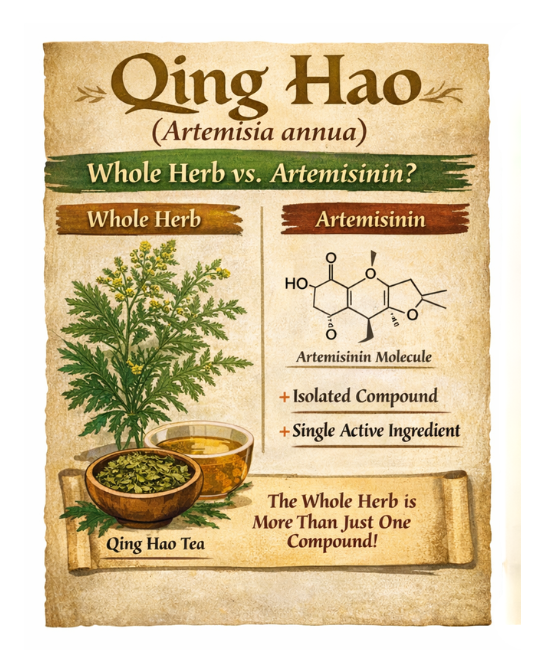
Qing Hao vs “Wormwood” vs Artemisinin (Not the Same Thing)

Qing Hao (Artemisia annua)

The traditional Chinese herb discussed on this page.

“Wormwood” (often Artemisia absinthium)

“Wormwood” can refer to other Artemisia species in Western herbal traditions. Do not assume they are interchangeable. Always check the botanical name.

Artemisinin

Artemisinin is a compound derived from Artemisia annua and used in pharmaceutical antimalarial therapies (in combination therapy). Whole-herb use is not the same as isolated compounds.

Why this matters

Accurate identity improves safety, effectiveness, and customer trust—and it helps your page stand out as “the reliable one.”

Frequently Asked Questions

What is Qing Hao used for in Traditional Chinese Medicine?

Traditionally, it is used to clear summer-heat and clear deficient-heat patterns.

What is the typical dosage for Qing Hao?

A commonly cited decoction range is 3–9g, often added late in cooking. Individual needs vary.

Why is Qing Hao “added at the end”?

It’s commonly added late to help preserve certain aromatic qualities and avoid overcooking the herb.

Is Qing Hao the same as artemisinin?

No. Artemisinin is an isolated compound; Qing Hao refers to the whole herb.

Is Qing Hao the same as wormwood?

Not always. “Wormwood” can refer to different Artemisia species. Always verify the botanical name.

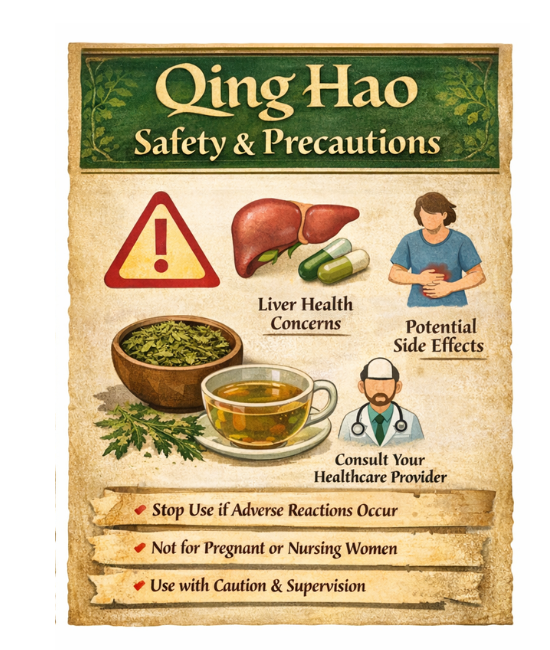
How safe is qing haoCautions, Side Effects, and Interactions

  • Pregnancy/breastfeeding: Avoid unless supervised by a qualified clinician.
  • Traditional contraindication: Use caution with Spleen/Stomach deficiency-cold patterns.
  • Medication interactions: If you take prescription medications, consult a qualified clinician or pharmacist before use.
  • Allergy: Avoid if sensitive to Artemisia family plants.

These statements have not been evaluated by the FDA. This product is not intended to diagnose, treat, cure, or prevent any disease.

Shop Qing Hao (Artemisia annua)

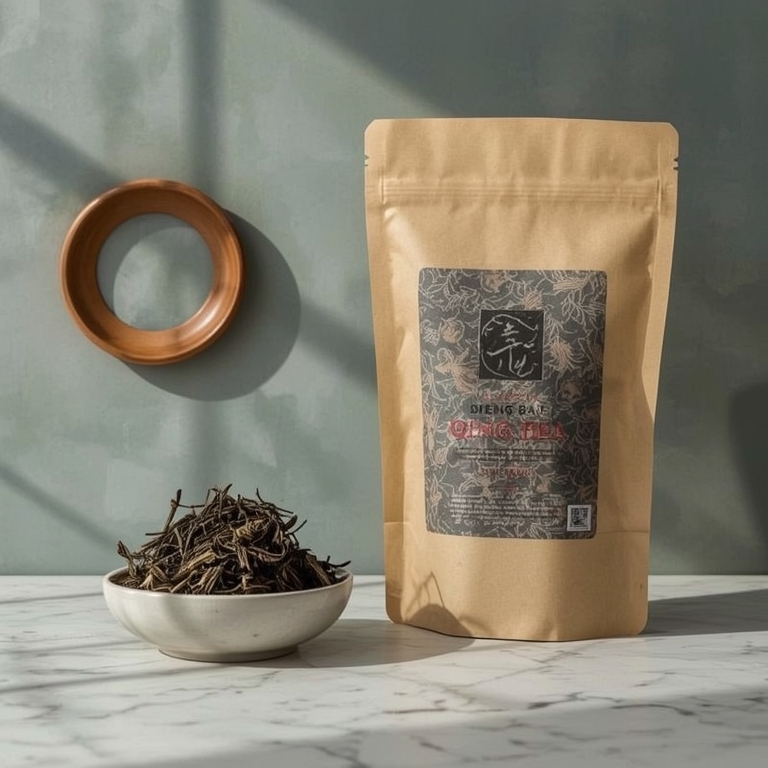
Qing Hao Cut Form

Botanical: Artemisia annua

Form: Cut / c/s (aerial parts)

Tip: If you’re building a formula, tell us whether your goal is summer-heat discomfort or deficient-heat style warmth—those are different strategies.


About Our Content + Why Trust 1st Chinese Herbs

We’ve been educating customers and supplying Chinese herbs since 1994. Our pages are written for clarity, traditional context, and responsible use—so customers can make confident, informed decisions.

  • Editorial approach: We prioritize traditional pattern explanations, identity clarity, and safety-forward guidance.
  • Quality approach: We focus on reputable sourcing, careful storage, and transparency.
  • Support: If you’re unsure which form to buy or how to prepare it, contact us—we actually answer.

Research + References 

  • The history of qing hao in the Chinese materia medica (PubMed)
  • WHO: Use of non-pharmaceutical forms of Artemisia
  • WHO: Treatment of malaria (position on plant material)

    1) History, identity, and “Qing Hao” in Chinese medicine

    • Hsu E. (2006) The history of qing hao in the Chinese materia medica. (PMID: 16566952) — Strong source for: historical use, naming/identity issues (qing hao vs huang hua hao), and classic preparation notes from Chinese texts. PubMed

    • Hsu E. (2006) Reflections on the ‘discovery’ of the antimalarial qinghao. (PMID: 16722826) — Supports: the link between qinghao and the discovery of artemisinin (qinghaosu) in the 1970s. PubMed+1

    2) Artemisinin in Artemisia annua and what tea/infusion actually extracts

    • van der Kooy F, Verpoorte R. (2011) The content of artemisinin in the Artemisia annua tea infusion. (PMID: 21544776) — Supports: artemisinin is present in tea, extraction varies by method/temperature, and measured infusion content. PubMed

    • Weathers PJ, et al. (2012) The flavonoids casticin and artemetin are poorly extracted into A. annua tea infusion… (PMC) — Useful for: showing tea extraction differs by compound, stability/behavior of constituents, and that “tea chemistry” is not one-size-fits-all. PMC

    • Weathers PJ, et al. (2014) Dried-leaf Artemisia annua: A practical malaria therapeutic… (PMC) — Helpful background on: dried-leaf preparations, extraction considerations, and broader chemistry discussion (still keep your claims DSHEA-clean). PMC

    3) “Whole herb vs single compound” (why artemisinin ≠ the whole plant)

    • van der Kooy F, Sullivan SE. (2013) The complexity of medicinal plants: The traditional Artemisia annua formulation, current status and future perspectives. (PMID: 23973523) — Supports: “not just one compound,” whole-plant complexity, and why standardization varies. PubMed

    • Gruessner BM, et al. (2019) It is not just artemisinin: Artemisia sp. for treating diseases… (PMC) — Broad review: phytochemistry and multiple bioactives; cite carefully and avoid disease-treatment wording on your page. PMC

    4) Safety 

    • Ruperti-Repilado FJ, et al. (2019) A Case of Acute Cholestatic Hepatitis Due to Artemisia annua… (PMID: 31681778) — Direct support for: rare but serious liver injury reports associated with Artemisia annua tea use. PubMed

    • Savage RL, et al. (2019) Suspected Hepatotoxicity… Artemisia annua extract… (PubMed + PMC case series) — Supports: pharmacovigilance/case series concerns with certain Artemisia annua extracts. PubMed+1

    • Jamil M, et al. (2023) A Case of Acute Liver Failure Due to Artemisinin-Derived… (PMC) — Supports: liver injury reported with supplements containing artemisinin/derivatives (again: use as a safety reference, not a “benefits” claim). PMC

    5) Clinical tea studies 

    If you cite clinical trials, you must also keep the page clear that herbs aren’t a substitute for medical treatment and avoid implying efficacy for malaria.

    • Mueller MS, et al. (2004) Randomized Controlled Trial of a Traditional Preparation of Artemisia annua… (PMID: 15109558) — Supports: Artemisia annua tea has been studied clinically in malaria contexts (medical context only; don’t market as treatment). PubMed

    • Munyangi J, et al. (2019) trial page exists on PubMed, but note: it has a retraction notice. I would not use it as supportive evidence on your page; if mentioned at all, cite the retraction. PubMed+1

Recommended For You View all