A Culinary Adventure with 1st Chinese Herbs
The Spice of Life: Discover the Hidden World of Chinese Herbs & Spices
From fragrant cinnamon and star anise to mysterious tsaoko cardamom and aged mandarin peel.
Discover extraordinary flavors, centuries of culinary tradition, and ingredients that can transform everyday cooking.
What if the most interesting ingredients in your kitchen were hiding in an herbal apothecary?
Imagine opening a jar of aged mandarin peel and discovering its rich, bittersweet citrus fragrance. Or dropping a single star anise into a simmering pot of broth and watching an ordinary dinner become something extraordinary.
Now imagine discovering spices you may never have encountered: smoky Cao Guo, fragrant Sha Ren, fiery long pepper, and aromatic galangal.
Welcome to the spice of life, where flavor, fragrance, tradition, and discovery come together.
At 1st Chinese Herbs, family-owned since 1994, we believe these remarkable plants deserve to be discovered, appreciated, and understood.
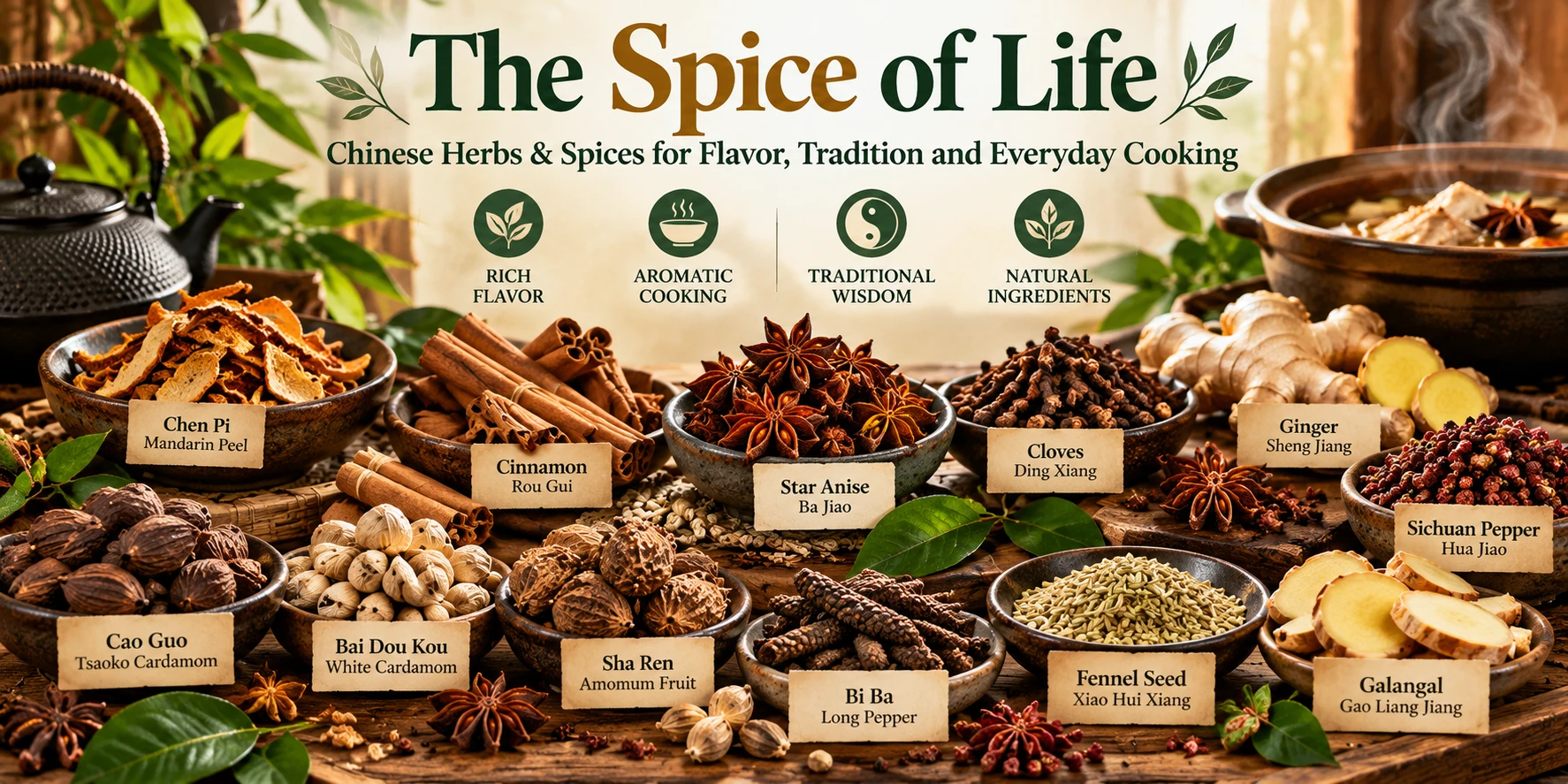
What Makes Chinese Spices So Extraordinary?
A spice is generally an aromatic plant ingredient used to season food. Spices may come from bark, roots, rhizomes, seeds, fruits, flower buds, or other plant parts.
Culinary herbs are often leafy, but the distinction is not absolute. Many plants are used as both herbs and spices depending on their preparation.
Chinese culinary traditions have developed sophisticated ways of combining fragrant ingredients. A pinch of Sichuan pepper can add a tingling sensation, star anise contributes sweet licorice-like notes, and aged mandarin peel adds bittersweet citrus depth.
The secret isn't always using more spice.
It's knowing how to combine aromas so that one ingredient complements another without overwhelming the dish.
Meet 12 Chinese Spices Worth Discovering
Some are familiar favorites. Others are hidden treasures of regional Chinese cooking. Each brings something distinctive to the table.
Citrus & Fragrant
1. Chen Pi — Mandarin Peel
Dried mandarin peel contributes deep citrus fragrance with a pleasant bitter edge.
Try it in: Broths, braised meats, red bean desserts, and tea.
Flavor: Citrusy, bittersweet, aromatic.
Smoky & Bold
2. Cao Guo — Tsaoko Cardamom
A large, intensely aromatic spice pod prized in certain Chinese braising traditions.
Try it in: Beef stews, hot pot broths, and long-simmered dishes.
Flavor: Smoky, pungent, earthy.
Warm & Aromatic
3. Sha Ren — Amomum Fruit
A fragrant member of the ginger family, valued for its distinctive aromatic character.
Try it in: Regional meat dishes, broths, and spice blends.
Flavor: Warm, aromatic, slightly camphor-like.
Delicate & Fragrant
4. Bai Dou Kou — White Cardamom
An aromatic spice used in Chinese cooking, particularly in savory preparations.
Try it in: Braised dishes, aromatic soups, and regional spice mixtures.
Flavor: Fresh, fragrant, gently pungent.
Peppery & Complex
5. Bi Ba — Long Pepper
A distinctive pepper with an elongated appearance and a complex pungent flavor.
Try it in: Meat seasoning, sauces, and traditional spice mixtures.
Flavor: Peppery, warm, subtly sweet.
Sharp & Earthy
6. Gao Liang Jiang — Galangal
A fragrant rhizome related to ginger, with its own sharp and distinctive aroma.
Try it in: Savory broths, meat dishes, and Asian-inspired recipes.
Flavor: Peppery, earthy, aromatic.
Sweet & Fragrant
7. Ba Jiao — Star Anise
One of the most recognizable Chinese spices, famous for its beautiful star-shaped pods.
Try it in: Chinese five-spice, braised pork, beef, and aromatic broths.
Flavor: Sweet, licorice-like.
Sweet & Woody
8. Rou Gui — Cinnamon Bark
Cinnamon adds richness and familiar fragrance to both savory and sweet dishes.
Try it in: Braised meats, baked goods, spice blends, and beverages.
Flavor: Sweet, woody, warming.
Intensely Aromatic
9. Ding Xiang — Cloves
Small flower buds with a remarkably concentrated fragrance.
Try it in: Marinades, spice blends, sauces, and braised dishes.
Flavor: Sweet, pungent, rich.
Tingly & Citrusy
10. Hua Jiao — Sichuan Pepper
Famous for its citrusy aroma and characteristic tingling sensation on the tongue.
Try it in: Chili oil, stir-fries, noodle dishes, and seasoning blends.
Flavor: Citrusy, floral, tingling.
Warm & Familiar
11. Gan Jiang — Dried Ginger
Drying ginger changes its aroma and makes it especially convenient for certain spice mixtures.
Try it in: Soups, spice blends, and warming beverages.
Flavor: Pungent, earthy, warm.
Sweet & Herbal
12. Xiao Hui Xiang — Fennel Seed
Small aromatic seeds that contribute sweetness and complexity to Chinese spice blends.
Try it in: Five-spice mixtures, pork dishes, and marinades.
Flavor: Sweet, herbal, anise-like.
Botanical names and common names can vary among suppliers. Confirm the species and culinary suitability of each ingredient before using it in food.
Which Chinese Spice Fits Your Cooking Style?
You don't need to be an experienced chef to begin exploring Chinese spices. Start with the flavors you already enjoy.
Is This You? You Love Rich, Savory Dinners
You enjoy slow-cooked meals, hearty soups, and fragrant sauces that fill the kitchen with wonderful aromas.
Explore: Star anise, cinnamon, Cao Guo, and cloves.
Is This You? You Love Tea and Citrus
You appreciate fragrant beverages, citrus notes, and discovering new ways to enjoy traditional ingredients.
Explore: Chen Pi, ginger, and food-grade aromatic spices.
Is This You? You Love Trying New Flavors
You're curious about ingredients that aren't usually found on supermarket shelves.
Explore: Sha Ren, Bai Dou Kou, Bi Ba, and galangal.

Chinese Five-Spice: A Small Blend With a Big Personality
Chinese five-spice powder is one of the best-known examples of how different aromas can work together.
A familiar version combines star anise, cinnamon, fennel seed, cloves, and Sichuan pepper. Recipes vary by region and family tradition.
Why does five-spice taste so distinctive?
It brings together sweetness, pungency, fragrance, warmth, and the unusual citrusy sensation of Sichuan pepper.
Three Easy Ways to Bring Chinese Spices Into Your Kitchen
Recipe 1: Homemade Chinese-Style Five-Spice Blend
Ingredients:
2 whole Chinese star anise pods
1 small cinnamon stick
1 teaspoon fennel seeds
1/2 teaspoon Sichuan peppercorns
3 whole cloves
Instructions:
Confirm all ingredients are food-grade and suitable for culinary use.
Gently toast the spices in a dry skillet over low heat until fragrant, taking care not to burn them.
Allow them to cool completely.
Grind finely in a clean spice grinder.
Store in a labeled, airtight container.
Try it: Begin with a small pinch in marinades, roasted vegetables, or braised meats.
Recipe 2: Fragrant Chinese-Style Braising Broth
Ingredients:
4 cups unsalted broth or water
1 whole Chinese star anise pod
1 small cinnamon stick
1 small piece of food-grade dried mandarin peel
2 slices fresh ginger
1 tablespoon reduced-sodium soy sauce, optional
Instructions:
Combine the ingredients in a saucepan.
Bring to a gentle simmer.
Simmer for approximately 15–20 minutes.
Strain out the whole spices and ginger before serving or using the broth in a recipe.
Try it: Use as a fragrant base for vegetables, tofu, noodles, or braised dishes.
Recipe 3: Fragrant Mandarin Peel & Ginger Beverage
Ingredients:
2 cups water
1 small piece of food-grade dried mandarin peel
2 thin slices fresh ginger
Optional: a small amount of sweetener to taste
Instructions:
Rinse the peel if recommended by the supplier.
Add the peel and ginger to water.
Simmer gently for 10–15 minutes.
Strain and serve warm.
Flavor: Bright citrus fragrance with a gently pungent ginger finish.
This is a culinary beverage recipe, not a medicinal dosage recommendation.
One Ingredient, Two Traditions: The Kitchen and the Herbal Apothecary
Many Chinese botanicals have long histories in both food preparation and Traditional Chinese Medicine.
In cooking, spices are selected for flavor, fragrance, texture, and their ability to complement other ingredients.
In Traditional Chinese Medicine, practitioners have historically described botanicals using traditional concepts such as warming, cooling, pungent, sweet, and bitter properties.
For example, ginger and cinnamon are traditionally described as warming botanicals, while Chen Pi is associated with traditional concepts of Qi movement and digestion.
Important distinction:
Traditional TCM classifications describe a historical system of herbal practice. They should not be interpreted as proof that ordinary culinary servings treat or prevent disease.
What Does Modern Research Tell Us?
Researchers have investigated naturally occurring compounds in familiar spices, including gingerols in ginger, cinnamaldehyde in cinnamon, eugenol in cloves, and anethole in star anise.
Laboratory research can help scientists understand the chemistry of these plants. However, findings from isolated compounds, laboratory experiments, or concentrated preparations cannot automatically be applied to ordinary culinary use.
The most reliable reason to use a culinary spice is simple: it adds flavor and enjoyment to food.
How to Build Your Own Chinese Spice Pantry
You don't need dozens of ingredients to begin. A carefully chosen collection can open the door to a remarkable variety of traditional and contemporary dishes.
| Experience | Spices to Explore | What You Can Make |
|---|---|---|
| Just Beginning | Star anise, cinnamon, ginger, fennel | Broths, marinades, spice blends |
| Ready for More | Chen Pi, cloves, Sichuan pepper | Braising sauces, fragrant soups, regional dishes |
| Adventurous Cook | Cao Guo, Sha Ren, Bai Dou Kou | Complex aromatic broths and braises |
| Spice Enthusiast | Bi Ba, galangal, regional spice blends | Custom seasonings and specialty recipes |
Five Tips for Keeping Spices Fresh
- Store spices in airtight containers.
- Keep them away from heat, moisture, and direct sunlight.
- Label each container with its name and purchase date.
- Grind whole spices in small quantities when practical.
- Replace spices when their characteristic aroma has noticeably faded.
What to Look for When Buying Chinese Culinary Spices
An unfamiliar spice can be an exciting discovery, but botanical identity and intended use matter.
Before purchasing, consider:
Botanical identity: Does the label identify the correct plant?
Plant part: Is the product made from the fruit, bark, root, rhizome, or seed required by your recipe?
Culinary suitability: Is it intended for food use?
Appearance and aroma: Does it have the characteristics expected of that spice?
Supplier information: Can the seller explain its sourcing and available quality documentation?
Storage: Is the product packaged appropriately to protect its quality?
At 1st Chinese Herbs, we believe that clear product descriptions, botanical information, and responsible sourcing help customers make more informed decisions.
Important Safety Considerations
Culinary spices and concentrated herbal preparations are not necessarily interchangeable.
Use only ingredients confirmed to be appropriate for food.
Never substitute unidentified plants for familiar culinary spices.
Use genuine culinary Chinese star anise, not Japanese star anise, which is toxic.
Essential oils and concentrated extracts should not be substituted for whole spices without appropriate guidance.
If pregnant, nursing, taking medications, or managing a medical condition, consult a qualified healthcare professional before using concentrated herbal preparations.
Keep spices and herbal products away from children and pets.
Culinary amounts and traditional herbal preparation amounts serve different purposes. Follow the instructions appropriate to the product and intended use.
Frequently Asked Questions About Chinese Herbs & Spices
What is the difference between an herb and a spice?
Herbs commonly refer to leafy plant parts used for flavoring, while spices often come from seeds, fruits, bark, roots, rhizomes, or flower buds. The distinction is not absolute, and some plants are used in both ways.
Can Chinese medicinal herbs also be cooking spices?
Yes. Some botanicals used in Traditional Chinese Medicine also have established culinary uses. However, not every medicinal herb is appropriate for food, and the specific product must be suitable for culinary use.
What is Chen Pi used for in cooking?
Food-grade dried mandarin peel can be used to add bittersweet citrus aroma to broths, braised dishes, desserts, and beverages.
What is Cao Guo?
Cao Guo, often called tsaoko cardamom, is an aromatic spice used in some Chinese braised meat dishes, soups, and hot pot broths.
What spices are used in Chinese five-spice powder?
A common blend contains star anise, cinnamon, fennel seed, cloves, and Sichuan pepper. Recipes vary by region and manufacturer.
Are all dried Chinese herbs safe to cook with?
No. Some herbs are intended for specialized traditional preparations rather than ordinary food use. Always confirm botanical identity and culinary suitability.
Should I buy whole spices or ground spices?
Whole spices are useful when you want to grind small amounts as needed or simmer them in broths. Ground spices are convenient for quick seasoning. Choose according to your recipe and storage needs.
How do I choose my first Chinese spices?
Start with familiar ingredients such as star anise, cinnamon, ginger, and fennel. Then explore Chen Pi, Sichuan pepper, or Cao Guo as your interest grows.
Bring a Little More Spice Into Your Life
Every spice has a story. Every fragrance invites discovery. And every new ingredient offers another opportunity to make an ordinary meal extraordinary.
Explore traditional Chinese herbs and discover the fascinating botanicals behind centuries of culinary inspiration.
Explore Our Chinese Herb Collection1st Chinese Herbs
Family-owned since 1994. Helping customers discover the remarkable world of traditional herbs.
The Spice of Life Is About Discovery
Sometimes all it takes is one unfamiliar ingredient to change the way you think about cooking.
A piece of aged mandarin peel. A fragrant star anise pod. A pinch of Sichuan pepper. Or an aromatic spice you've never encountered before.
The world of Chinese herbs and spices is rich with flavor, history, and possibilities.
So open the spice jar, explore something new, and bring a little more flavor into everyday life.