
Science Turning 60: Sleep Had Simply Left Me
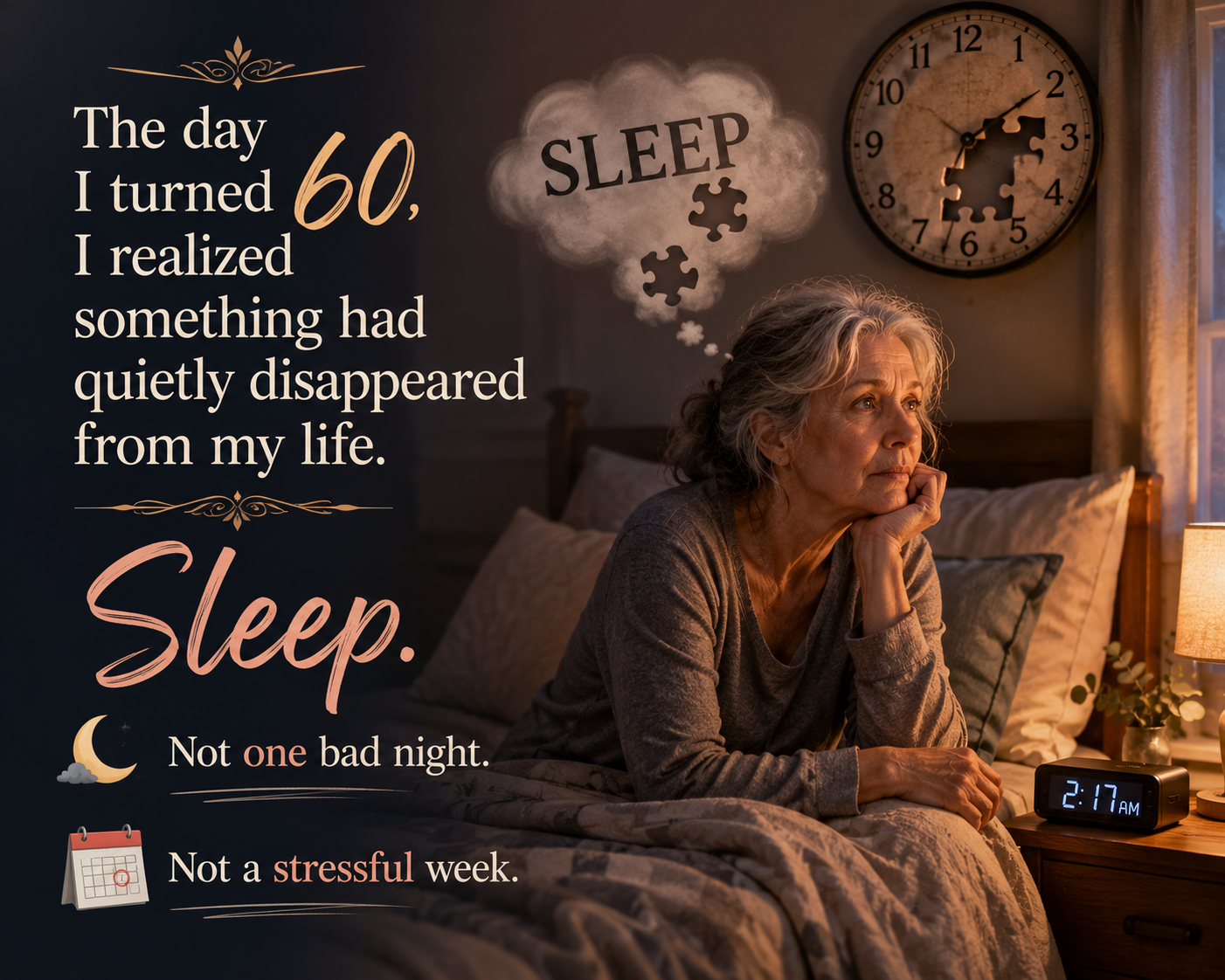
The day I turned 60, I realized something had quietly disappeared from my life.
Sleep. Not one bad night. Not a stressful week.
Month after month, I’d crawl into bed exhausted, only to lie there staring at the ceiling while my brain decided it was the perfect time to replay conversations from twenty years ago, worry about tomorrow, solve problems that didn’t need solving, and wonder whether I had remembered to water the tomatoes.
If you’ve ever spent the night watching the clock instead of sleeping, you know exactly what I’m talking about.
I Tried Just About Everything
Like so many people desperate for a good night's sleep, I started with all the remedies everyone swore by.
Valerian.
"This is one of the best herbs for sleep," people said. It didn't work for me.
Schisandra.
"Give it a few nights. This one really helps." It didn't work for me.
Warm milk.
"It's an old-fashioned remedy that's helped people for generations." It didn't work for me.
Counting sheep.
"It calms your mind and helps you drift off." It didn't work for me.
One by one, every suggestion ended the same way. I was still lying there. Still awake.
Still watching the clock. That's when a troubling thought crept into my mind.
What if this wasn't just ordinary insomnia? What if something else was going on?
After enough sleepless nights, you begin to wonder if you've somehow forgotten how to sleep. You stop looking forward to bedtime because you already know what's waiting for you: another long night of staring into the darkness while the rest of the world sleeps.
So I tried some alternatives:
I graduated to reciting all fifty states in alphabetical order.
Alabama… Alaska… Arizona… Arkansas…
I usually made it somewhere around Nebraska before my mind wandered off to wondering why one of my tomato plants looked happier than the others.
Then came YouTube.
Apparently, there are hundreds of videos promising to have you asleep in five minutes.
Rainstorms. Ocean waves. White noise. Brown noise.
Someone whispering that my eyelids were getting heavier.
Five minutes turned into two hours. Nothing worked.
By two o’clock in the morning I wasn’t just tired anymore. I was frustrated.
I dreaded bedtime because I already knew how it was going to end.
Then I Learned Something Unexpected

One evening I decided to try a traditional Chinese herb called Bai Zi Ren (Biota Seed).
I honestly didn’t expect much.
After all, I’d already tried almost everything else.
But what happened next surprised me.
Not because Bai Zi Ren instantly put me to sleep.
It didn’t.
Instead, it taught me something much more important.
I had been fighting my own body every single evening.
What Is Bai Zi Ren?
Bai Zi Ren, also known as Biota Seed or Platycladus orientalis seed, has been used for centuries in Traditional Chinese Medicine. Traditionally it has been included in herbal formulas intended to nourish the Heart and support a calm, settled mind. Today, many people are interested in learning about its long history of traditional use as part of healthy evening routines.
|
The Four Changes That Made the Difference
Looking back, I don’t think the herb was the entire answer.
It became part of an evening routine that finally made sense.
1. I Changed the Timing
Instead of taking Bai Zi Ren right before bed, I drank it around 6:00 p.m.
Around 9:00 p.m., I’d begin to feel naturally relaxed.
For me, timing mattered. Though let me make something very clear, I still have no idea why it took three hours for me to feel the effect.
2. Dinner Had to Be Earlier
For years I’d eat dinner around 7:00 p.m.
Then I’d wonder why my body didn’t feel ready to sleep.
I moved dinner to before 5:00 p.m.
That simple change seemed to help my evenings feel calmer.
3. I Stopped Feeding My Brain Drama
This one was harder than I expected.
No crime shows. No emotional dramas. No suspense.
And absolutely no science fiction. I love science fiction.
Unfortunately, my imagination loves it even more.
Instead of sleeping, I’d spend the next two hours wondering whether time travel might actually be possible.
My brain didn’t need excitement. It needed permission to slow down.
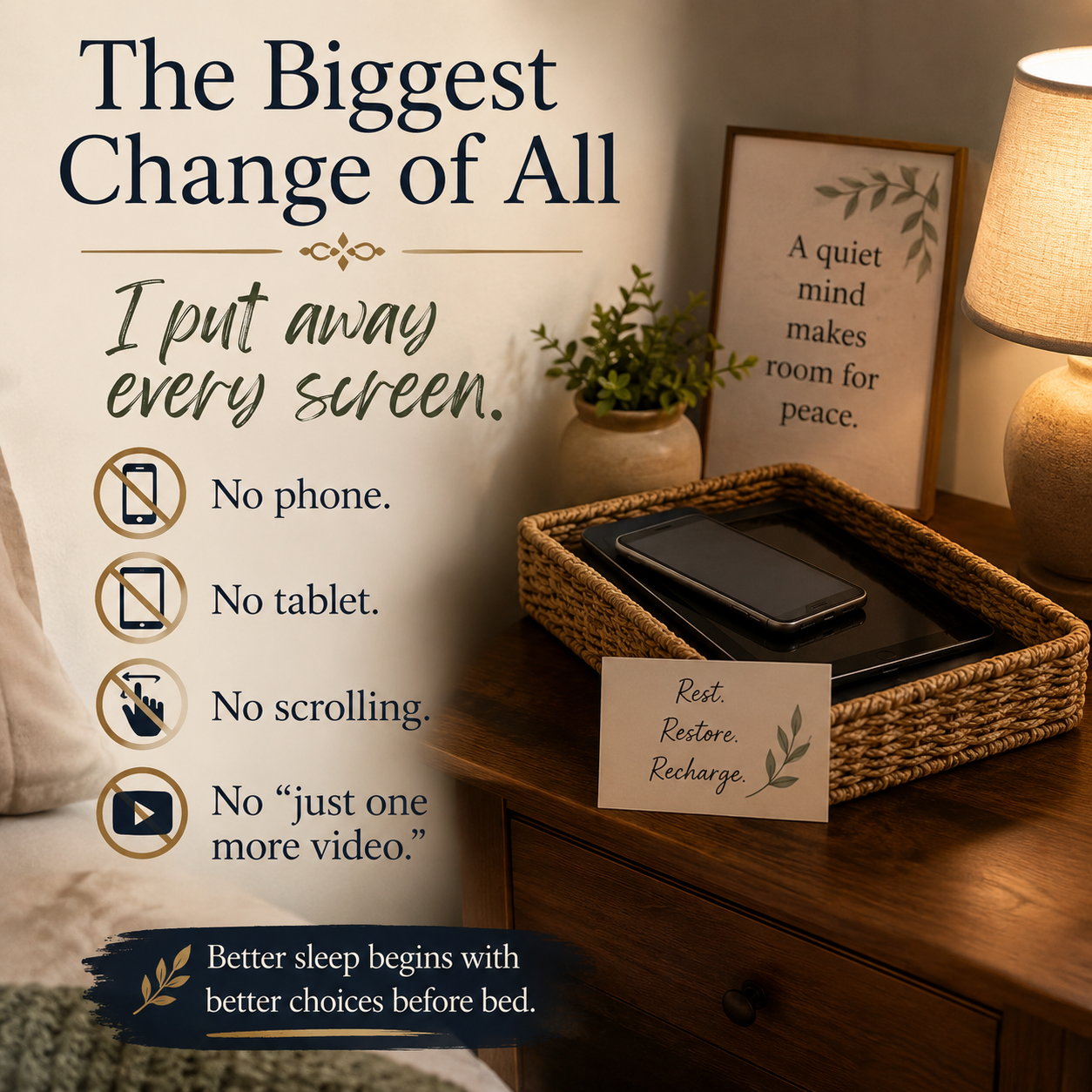
4. The Biggest Change of All
I put away every screen.
No phone.
No tablet.
No scrolling.
No “just one more video.”
Instead, I picked up an old-fashioned paper book. Usually something about gardening.
Sometimes a book about growing vegetables. And when I really couldn’t sleep…
I’d reach for one of my favorites.
How to Cook Beans 100 Different Ways.
Now before you laugh… There are no villains (nor vanilla beans; sorry I couldn't let that slide)
No cliffhangers. No explosions. Just beans. Oddly enough…
Beans turned out to be incredibly relaxing.
The Moment It All Made Sense!
The biggest lesson wasn’t finding Bai Zi Ren.
The biggest lesson was discovering that my body already knew how to sleep.
I simply had to stop giving it reasons to stay awake.
The herb helped me create a calmer evening.
The early dinner helped.
The quiet book helped.
Turning off the screens helped.
Each piece mattered.
Together, they became the routine my body had been asking for all along.
What Does Science Say?
Researchers continue studying many traditional herbs used for relaxation and sleep, including herbs used in Traditional Chinese Medicine. At the same time, sleep researchers consistently point to lifestyle factors that can influence sleep quality, such as maintaining a consistent schedule, reducing evening screen exposure, avoiding mentally stimulating activities close to bedtime, and allowing time to unwind before bed.
That made me smile.
Without realizing it, I had slowly built an evening routine that combined both traditional wisdom and modern sleep habits.
Would It Work for Everyone?
Probably not.
We’re all different.
What worked for me may not work the same way for someone else.
But perhaps that’s the point.
I wasn’t looking for a miracle.
I was looking for a better evening.
Once I found that, better sleep seemed to follow.
Looking Back
If someone had asked me a few years ago what finally helped me sleep, I probably would have answered, “Bai Zi Ren.”
Today my answer is different.
I’d say it was Bai Zi Ren, an earlier dinner, fewer screens, less evening stimulation, and one wonderfully boring book about cooking beans.
Sometimes the answer isn’t one thing.
Sometimes it’s several small things working together.
Reflection
We often spend years searching for the perfect solution, when what we really need is a better routine. Perhaps restful sleep doesn’t begin the moment we close our eyes. Perhaps it begins three hours earlier, with the quiet choices we make before our head ever reaches the pillow.
References
- Chang AM, Aeschbach D, Duffy JF, Czeisler CA. Evening use of light-emitting eReaders negatively affects sleep, circadian timing, and next-morning alertness. Proceedings of the National Academy of Sciences. 2015.
https://pubmed.ncbi.nlm.nih.gov/25535358/ - Irish LA, Kline CE, Gunn HE, Buysse DJ, Hall MH. The role of sleep hygiene in promoting public health: A review of empirical evidence. Sleep Medicine Reviews. 2015.
https://pubmed.ncbi.nlm.nih.gov/25454674/ - Stepanski EJ, Wyatt JK. Use of sleep hygiene in the treatment of insomnia. Sleep Medicine Reviews. 2003.
https://pubmed.ncbi.nlm.nih.gov/14652136/ - Harvey AG. A cognitive model of insomnia. Behaviour Research and Therapy. 2002.
https://pubmed.ncbi.nlm.nih.gov/12186352/ - Crowley K. Sleep and sleep disorders in older adults. Neuropsychology Review. 2011.
https://pubmed.ncbi.nlm.nih.gov/20108117/ - Sateia MJ, Buysse DJ, Krystal AD, Neubauer DN, Heald JL. Clinical Practice Guideline for the Pharmacologic Treatment of Chronic Insomnia in Adults. Journal of Clinical Sleep Medicine. 2017.
https://pubmed.ncbi.nlm.nih.gov/27998379/ - Ni X, Shergis JL, Guo X, et al. Updated clinical evidence of Chinese herbal medicine for insomnia: A systematic review and meta-analysis of randomized controlled trials.
https://pubmed.ncbi.nlm.nih.gov/32036785/ - Roenneberg T, Merrow M. The Circadian Clock and Human Health. Current Biology. 2016.
https://pubmed.ncbi.nlm.nih.gov/26804575/ - Phillips AJK, Clerx WM, O'Brien CS, et al. Irregular sleep/wake patterns are associated with poorer academic performance and delayed circadian and sleep timing. Scientific Reports. 2017.
https://pubmed.ncbi.nlm.nih.gov/29146965/ - Riemann D, Baglioni C, Bassetti C, et al. European guideline for the diagnosis and treatment of insomnia. Journal of Sleep Research. 2017.
https://pubmed.ncbi.nlm.nih.gov/28875581/
These references provide strong support for the article's key points regarding sleep hygiene, reducing screen time before bed, the effects of aging on sleep, maintaining a consistent evening routine, and the role of Traditional Chinese Medicine in supporting healthy sleep habits.
Educational Disclaimer: This article describes one person’s experience and is intended for educational purposes only. Bai Zi Ren has a long history of traditional use in Chinese herbal practice, but individual experiences vary. This article is not intended to diagnose, treat, cure, or prevent any disease. Consult a qualified healthcare professional before using herbal products, especially if you have a medical condition, are pregnant or nursing, or take prescription medications.