How to Organize Your Herbal Pantry: Labels, Dates & Storage
A practical guide to keeping bulk Chinese herbs, herbal powders, extracts, teapills, and teas organized, properly identified, and ready for their intended use.
You ordered your herbs, put them in the cupboard, and planned to use them. Then life got busy. A few weeks later, you find a bag of dried roots behind the tea tins, a jar of powder without a clear label, and an extract you no longer remember how to prepare.
An herbal pantry does not need to look like a professional apothecary. It needs to answer four questions: What do I have? Where is it? Is it suitable to use? And what do I do with it?
At 1st Chinese Herbs, we've helped customers explore Chinese and Western botanicals since 1994. This guide will help you build a simple system for organizing the herbs you already own, protecting them during storage, and making realistic plans for their use.
1. Sort Your Herbs in 30 Minutes
Start with a clean, dry workspace. Gather all your dried herbs, powders, extracts, teas, teapills, and herbal formulas. Keep each product in its original labeled package while sorting.
Divide everything into three groups:
Group
What Belongs Here
Next Step
Ready to organize
Clearly identified products in acceptable condition.
Label and store.
Needs review
Products with uncertain dates, incomplete information, or unclear directions.
Keep separate and verify before use.
Do not use
Products with suspected mold, pest contamination, or identity that cannot be established.
Keep separate and arrange safe disposal.
Important: Never identify an unknown dried herb by appearance, smell, or an online photograph alone. If you cannot reliably establish what a product is, do not consume it.
2. Choose the Right Storage Location and Containers
For most dried herbs, choose a cool, dry, dark, clean location protected from pests. An interior pantry cupboard away from the stove, sink, dishwasher, and heating vents is usually a practical choice.
Where Should You Avoid Storing Herbs?
Sunny windowsills: Direct light and temperature changes can affect stored botanicals.
Above the stove: Heat and steam create unfavorable storage conditions.
Bathrooms: Frequent humidity changes make them poor general storage locations.
Unheated sheds and garages: Temperature swings, moisture, pests, and chemicals may create problems.
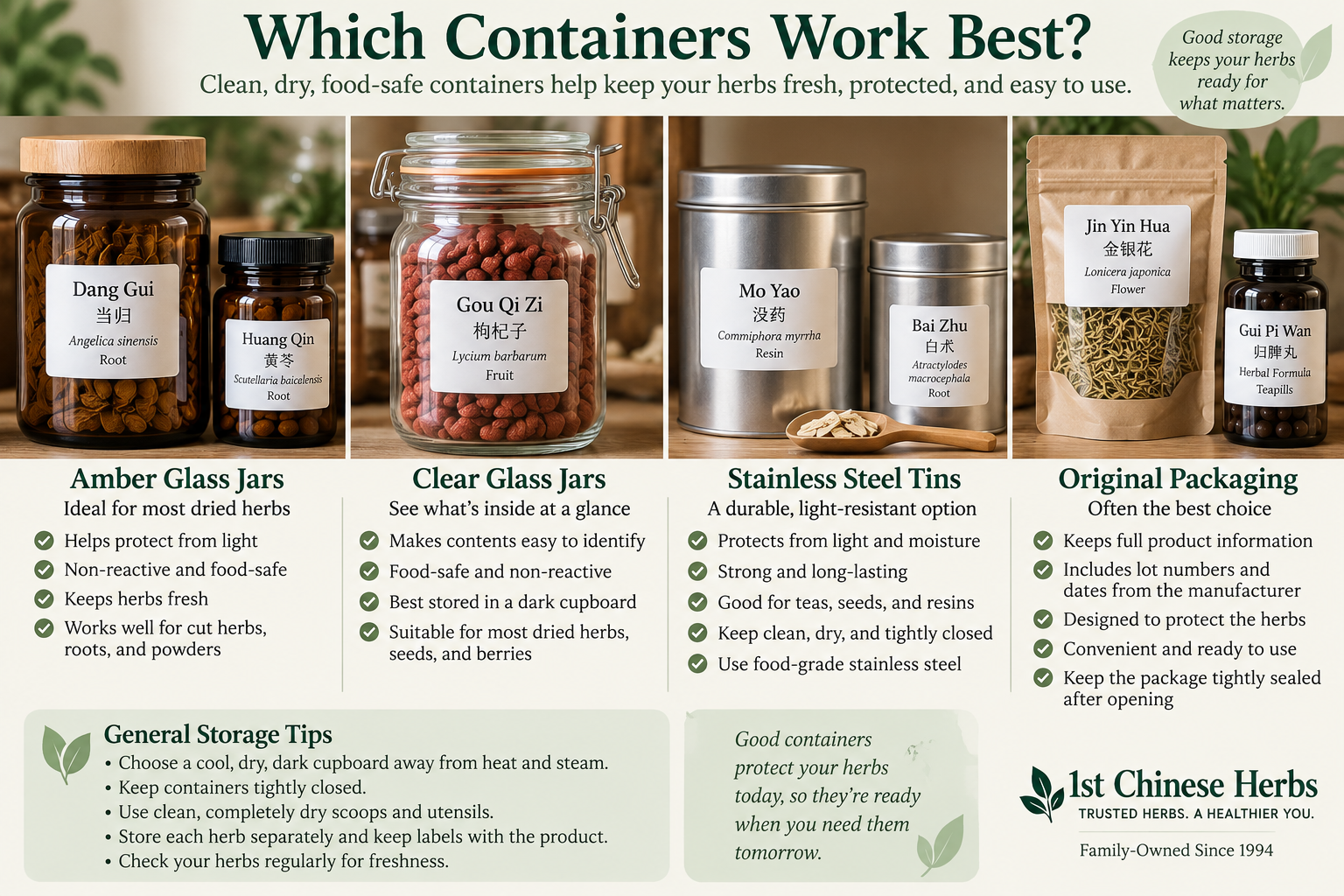
Which Containers Work Best?
You do not need expensive matching jars. Use clean, completely dry, food-safe containers that close securely.
Container
Practical Use
Amber glass
Helps limit light exposure; use a tight-fitting lid.
Clear glass
Makes contents visible; keep inside a dark cupboard.
Food-safe tins
Useful when clean, dry, appropriate for food, and securely closed.
Original packaging
Often suitable when the manufacturer provides protective, resealable packaging.
Before transferring a product, ensure the container and lid are completely dry. Transfer only one identified product into each container. Keep different lots separate.
Do not discard the original label. Retain it on the container or with your pantry records. It may contain ingredients, directions, lot numbers, expiration dates, and safety information.
Do Different Herbal Forms Need Different Storage?
Most dried products share the same basic storage principles, but their packaging and handling requirements may differ.
Cut herbs and roots: Keep dry and securely closed. Preserve the botanical name and plant-part information.
Whole-herb powders: Use a completely dry scoop and avoid prolonged exposure to humid air.
Extract powders: Follow manufacturer directions. Some absorb moisture readily, and their ingredient statements and extract ratios should be retained.
Teapills and tablets: Keep the original bottle and label whenever possible.
Loose teas: Protect from moisture, light, heat, and strong odors.
Refrigeration or freezing is not automatically recommended for dried herbs. Condensation can introduce moisture when cold containers are opened. Follow product-specific storage instructions when provided.
3. Create Labels That Tell You What You Need to Know
A good label should make sense six months from now, even if you have forgotten why you purchased the product.
Record these six pieces of information:
Product identity: Common, Pinyin, and botanical names, as applicable.
Form and plant part: Cut root, rhizome powder, extract, teapills, or another preparation.
Date received: When the product arrived.
Date opened: When you first opened it.
Lot and labeled date: Copy the lot number and any expiration or best-by date provided.
Directions reference: Where to find the original instructions and precautions.
EXAMPLE PANTRY LABEL
Hu Zhang • Japanese Knotweed • Cut Rhizome
Received: Sept. 2026 | Opened: Sept. 2026
Lot / Best-by: See original label
Store: Cool, dry cupboard
How to use: tea, decoctions, formula, poultice, compress, footbath
Keep original packaging for full identity, preparation directions, and precautions.
What If There Is No Expiration Date?
Do not invent one. Record the received and opened dates, preserve any available lot information, and contact the supplier for product-specific shelf-life guidance. A received date is not the same as a harvest, manufacturing, or expiration date.
An inventory prevents forgotten purchases and helps you see what you already own before ordering more. A notebook, printed sheet, or spreadsheet is enough.
Product
Form
Location
Opened
Next Action
Hu Zhang
Cut
Shelf A
Sept. 2026
Check preparation directions
Huang Qin
Powder
Shelf B
Sept. 2026
Review label
Herbal tea blend
Loose tea
Tea area
Aug. 2026
Review weekly tea plan
Example entries only. These are not suggested products or serving schedules.
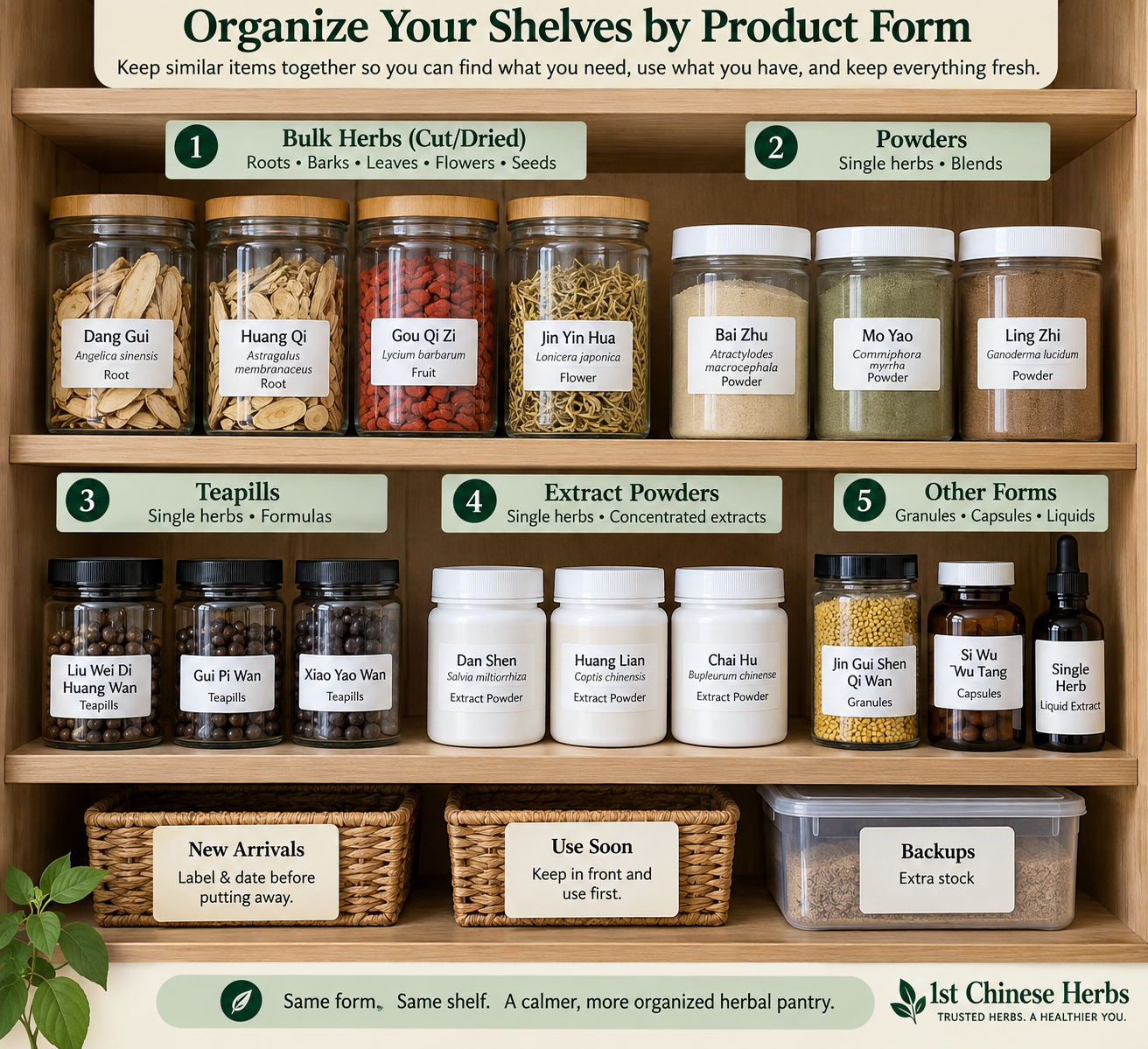
Organize Your Shelves by Product Form
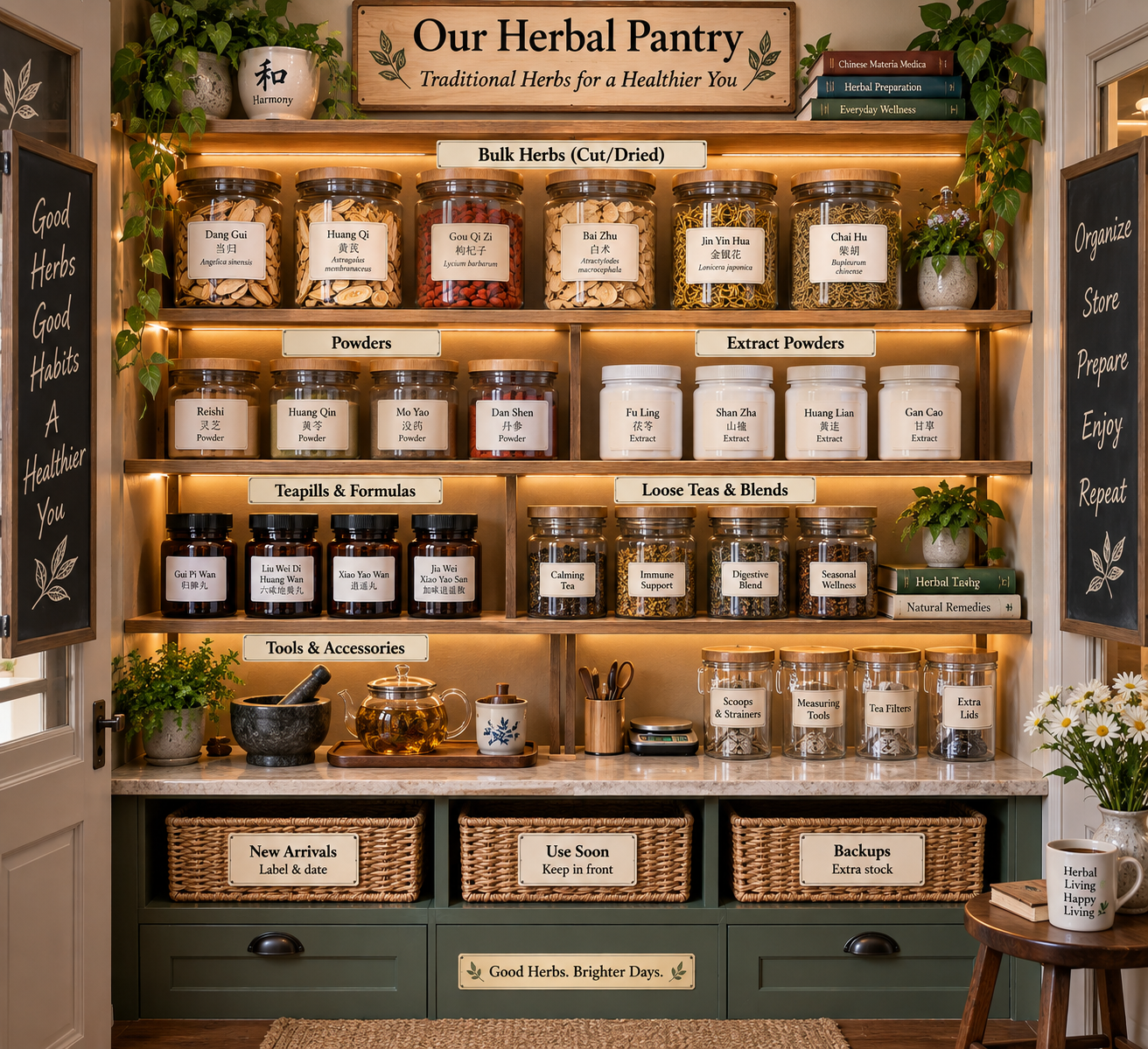
One simple system is to keep cut herbs together, powders and extracts together, teapills and formulas together, and everyday teas in a convenient tea area.
Keep frequently used products within easy reach. Put products needing review in a separate location so they are not accidentally used.
5. Make a Plan So Your Herbs Don't Just Sit in the Cupboard
An organized pantry makes it easier to use the products you purchased. But the goal is not to consume everything simply because you own it.
Start with one product you have already confirmed is appropriate for you. Read its directions, gather any equipment you need, and choose a convenient preparation time.
The Five-Minute Weekly Herb Plan
Look at your inventory and select one suitable herb or tea.
Review its preparation instructions and safety information.
Check whether you need a strainer, saucepan, scoop, or other equipment.
Choose a realistic time to prepare it.
Record any questions that need to be resolved before use.
For example, if you have an identified herbal tea with appropriate directions, you might choose an afternoon to prepare it. A traditional decoction may require additional preparation time and specific instructions.
Safety reminder: Do not begin several new herbal supplements at once just to reduce your inventory. If you take medications, have a medical condition, are pregnant, or are breastfeeding, consult a qualified healthcare professional before use.
Before You Buy More Herbs
Check your inventory, confirm the form and quantity you actually need, and consider whether you can realistically use the product within its labeled date. A smaller package may be more practical than a large quantity that remains unused.
6. Maintain Your Pantry and Recognize Storage Problems
Once your system is established, a quick weekly check and a more thorough monthly inventory are practical starting points.
Your Weekly 10-Minute Check
Return products to their designated places.
Make sure opened containers are securely closed.
Review products approaching their labeled dates.
Update your inventory after using or replacing an item.
Choose an appropriate product to prepare during the coming week.
When Should You Stop Using a Stored Herb?
What You Notice
What to Do
Visible or suspected mold
Do not use. Avoid sniffing closely or tasting.
Insects, webbing, or pest debris
Isolate the product and inspect nearby supplies.
Moisture inside the container
Stop use and investigate. Discard if contamination is suspected.
Unusual odor or appearance
Do not assume it is normal; seek product-specific guidance.
Powder clumping
Review storage history and manufacturer guidance. Clumping alone does not establish safety or spoilage.
Past the labeled expiration date
Follow manufacturer guidance; do not assume it remains suitable.
Do not try to rescue potentially contaminated herbs by heating, sun-drying, or mixing them with fresh material. Drying does not reliably reverse microbial contamination.
7. Herbal Pantry FAQs
Can I store herbal powders with my cooking spices?
They can share an appropriate pantry location, but keep herbal supplements clearly identified and separate from culinary ingredients. Never assume a concentrated extract can be used like an ordinary cooking spice.
Do I need a separate scoop for every powder?
Use a clean, completely dry scoop and prevent cross-contamination. Dedicated scoops are helpful when products have different ingredients or precautions.
How should I store a prepared herbal decoction?
Prepared liquids have different storage requirements from dried herbs. Follow the specific preparation, refrigeration, and use-by instructions for the formula. Do not apply dried-herb shelf-life guidance to prepared liquids.
Can I use herbs after their best-by date?
Best-by and expiration dates may have different meanings depending on the product. Follow the manufacturer's guidance and contact the supplier if you are unsure. Appearance alone cannot establish that a product remains suitable.
Should I take an herb every day just because I own it?
No. Use herbal supplements only when appropriate for you and according to suitable directions. Owning a product is not a reason to take it.
Your Herbal Pantry Starts With One Small Step
You don't need to reorganize everything in one afternoon. Start by identifying the herbs you already own. Give each product a clear label and a consistent place to live. Then choose one appropriate preparation to learn about.
A few simple habits can turn a forgotten cupboard into a practical herbal pantry that is easier to maintain.
Know what you have. Store it properly. Understand how to use it.