
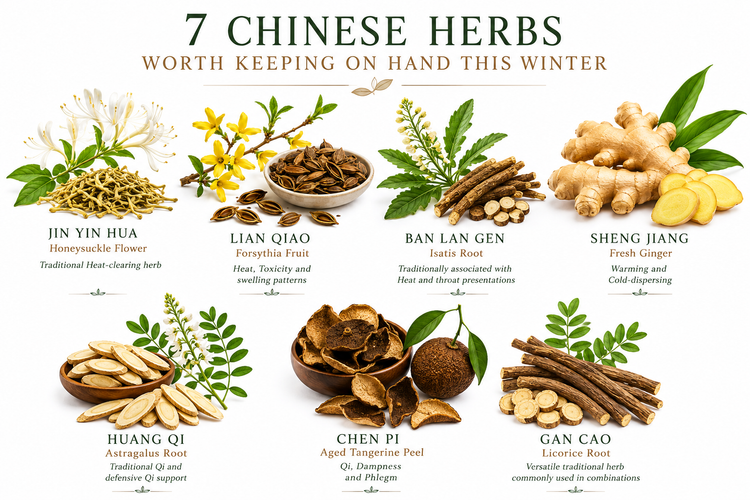
What to Keep in Your Chinese Herbal Pantry for Winter Comfort
Posted by 1st Chinese Herbs Research Team. on Aug 24th 2026
7 Chinese Herbs Worth Keeping on Hand This Winter
Winter is a good time to have a few useful Chinese herbs already in the cupboard. Not because every winter complaint is the same, but because Chinese herbalism distinguishes between cold, heat, throat discomfort, phlegm, and everyday support.
Here are seven traditional herbs worth knowing before you need them.
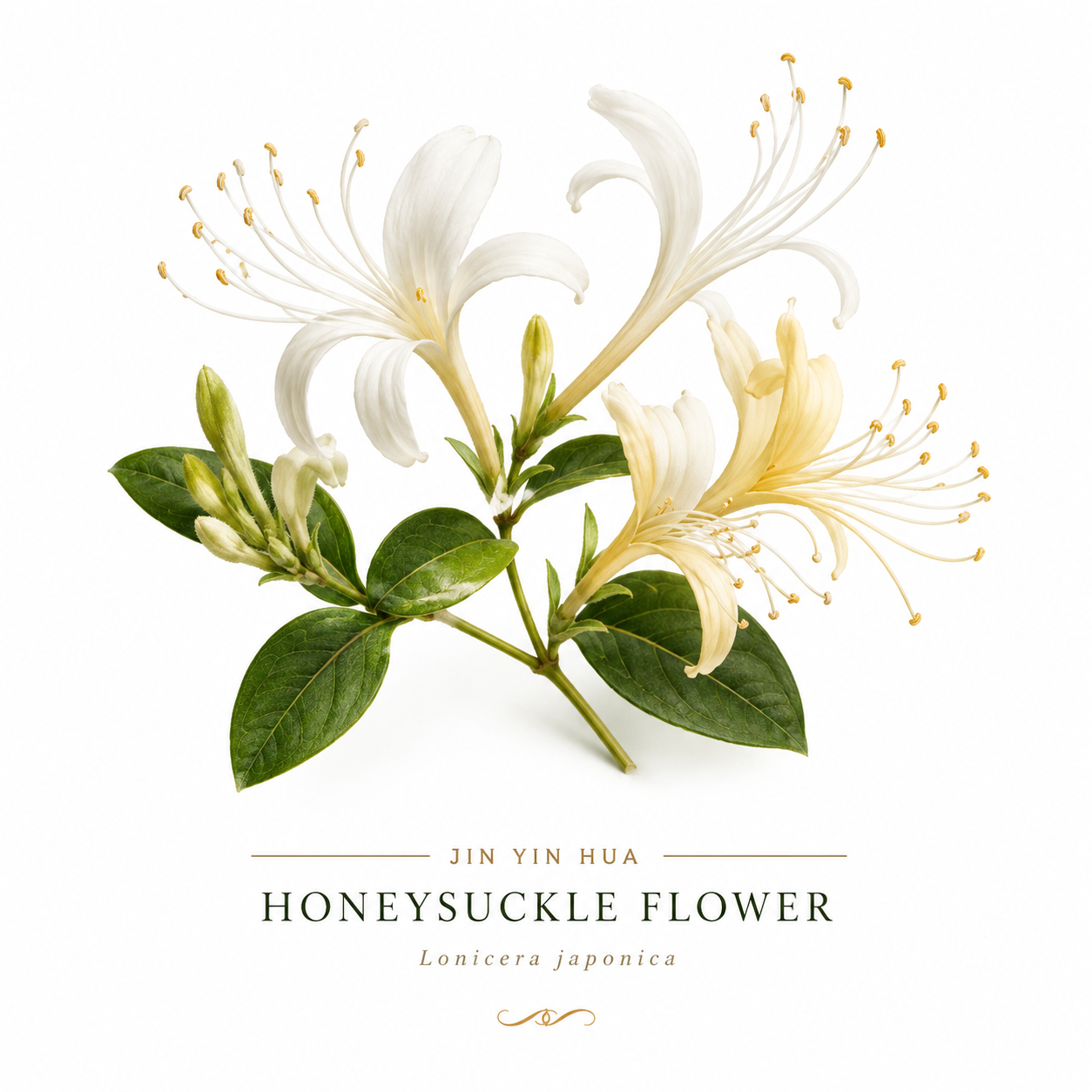
Jin Yin Hua — Honeysuckle Flower
Think: hot, red and irritated.
Jin Yin Hua is traditionally used to clear Heat and resolve Toxicity. It is commonly found in Chinese herbal combinations for acute Heat-type presentations, particularly when the throat feels hot or irritated.
It is frequently paired with Forsythia (Lian Qiao).
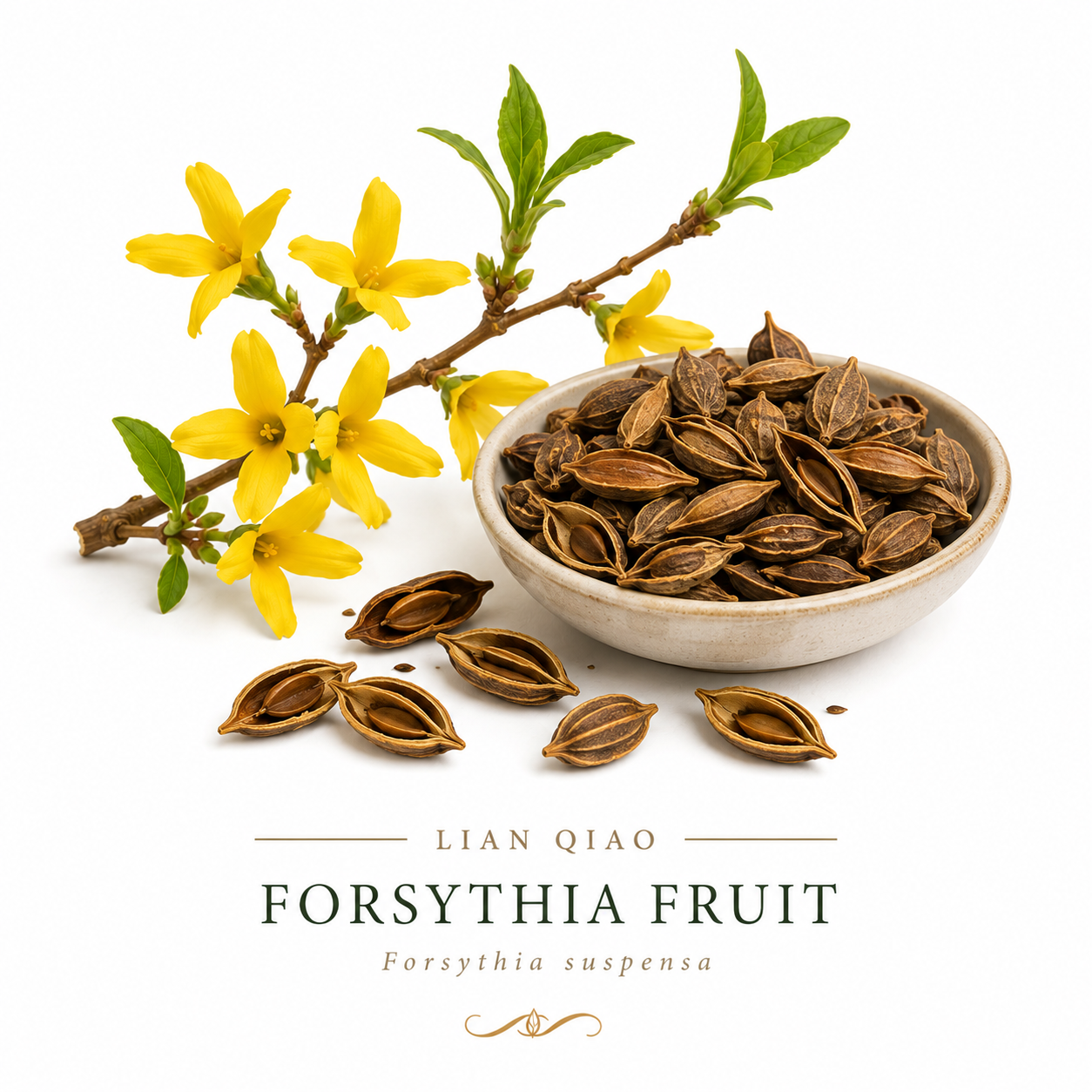
Lian Qiao — Forsythia Fruit
Think: heat with swelling.
Lian Qiao also clears Heat and resolves Toxicity in traditional Chinese herbalism, with a particular association with swelling.
Together, Lian Qiao and Jin Yin Hua are the principal herbs in the traditional formula Yin Qiao San.
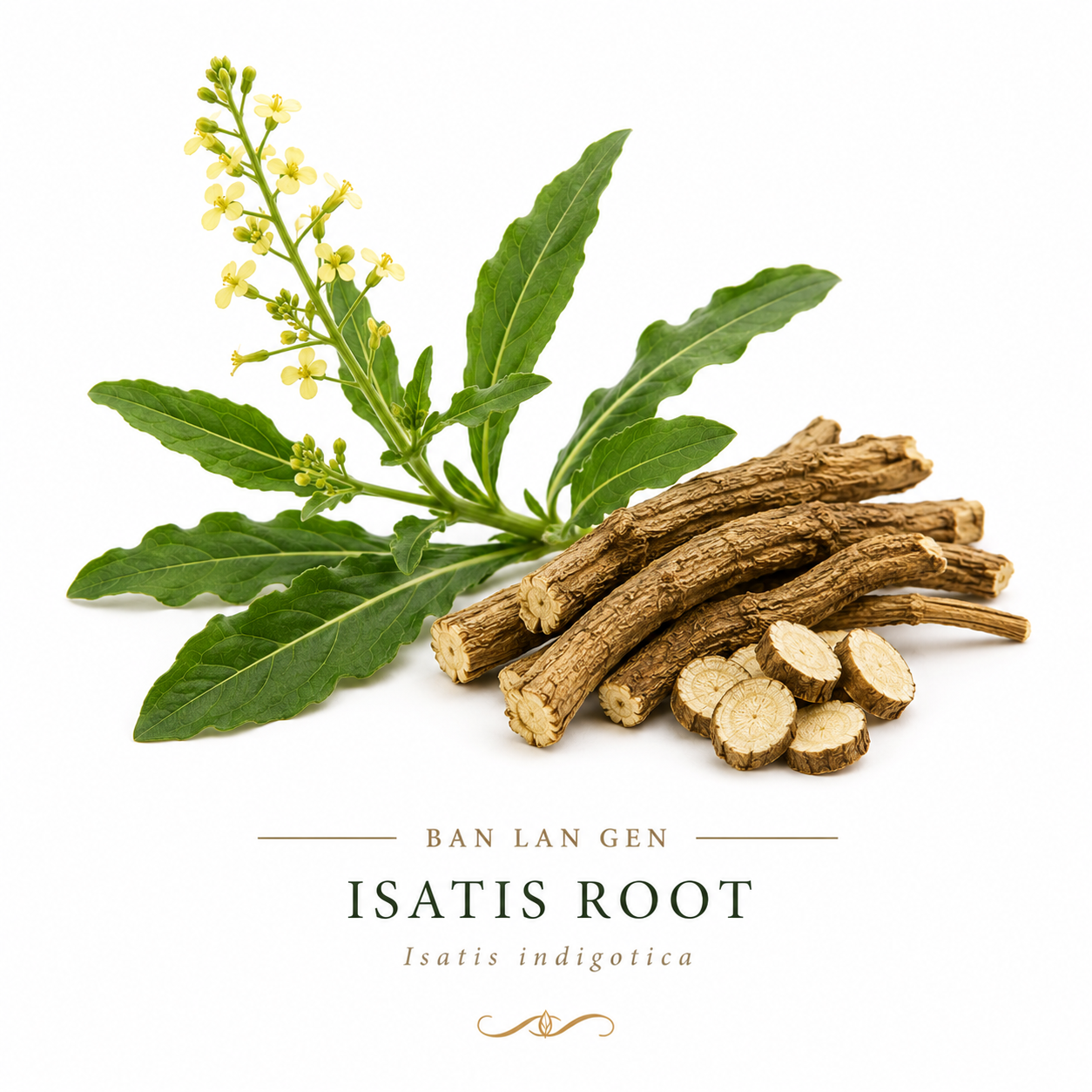
Ban Lan Gen — Isatis Root
Think: when your throat suddenly doesn't feel right.
Ban Lan Gen is traditionally used to clear Heat, resolve Toxicity, and benefit the throat.
Unlike an everyday tonic, this is an herb people generally keep available for short-term traditional use when needed.
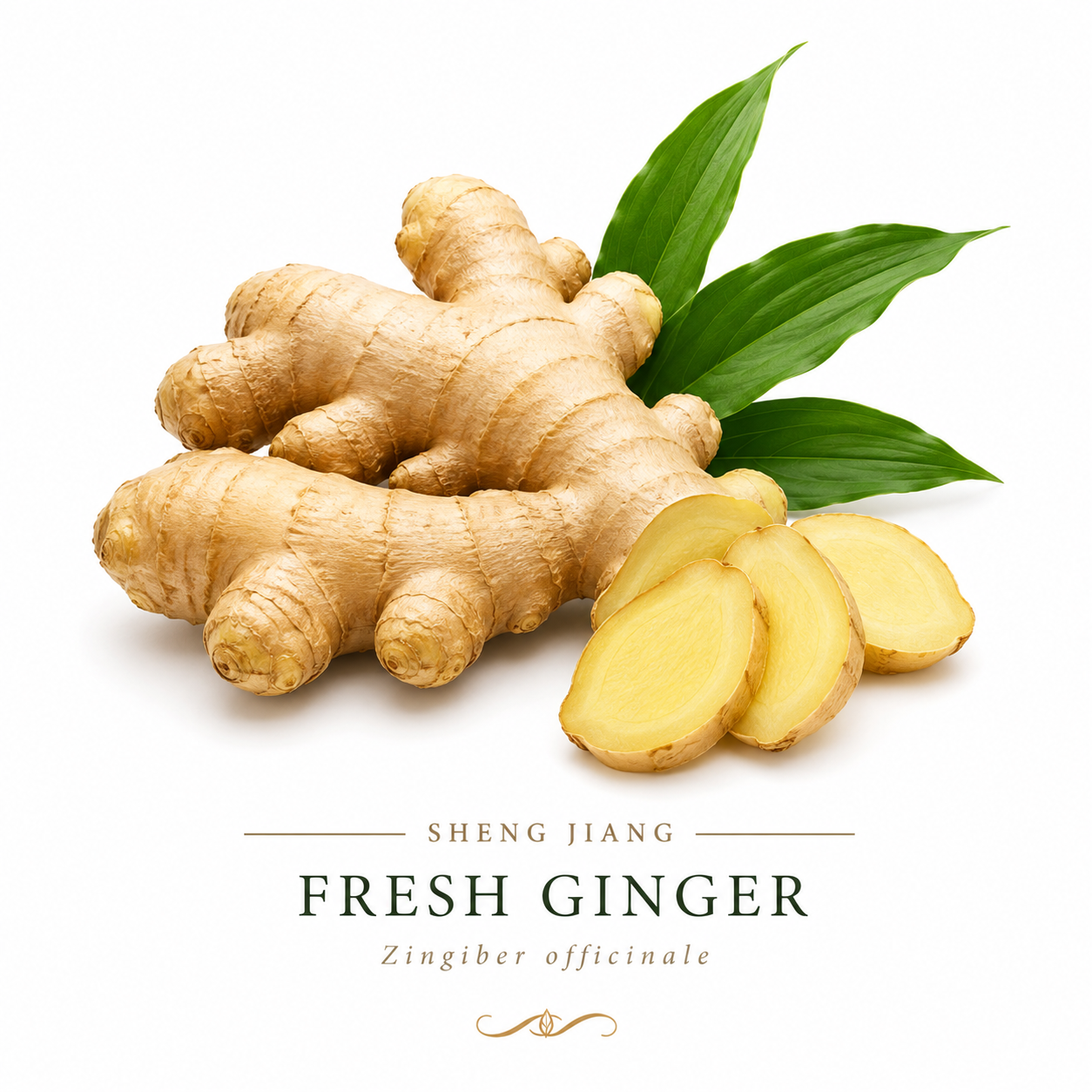
Sheng Jiang — Fresh Ginger
Think: cold and chilled.
Ginger provides the opposite side of the winter pantry.
Sheng Jiang is warming and traditionally used to disperse Cold and warm the middle. A simple ginger tea can be useful when what you want is warmth rather than a cooling herb.
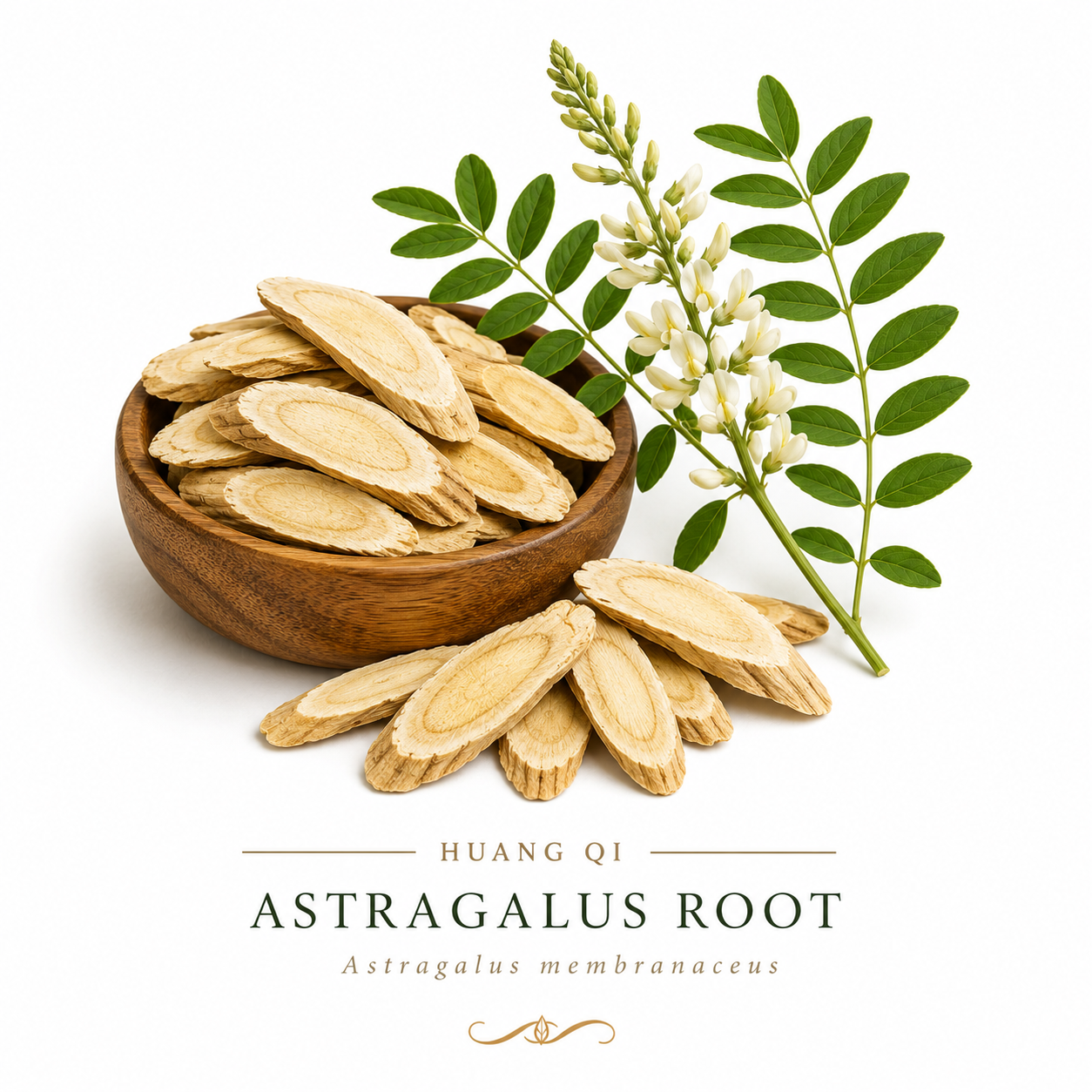
Huang Qi — Astragalus Root
Think: everyday support.
Huang Qi is traditionally used to tonify Qi and support Wei Qi, often translated as defensive Qi.
Rather than being reserved for when you already feel under the weather, Huang Qi is traditionally used as a tonic. Sliced Astragalus is easy to simmer as a decoction or add to soups and broths.
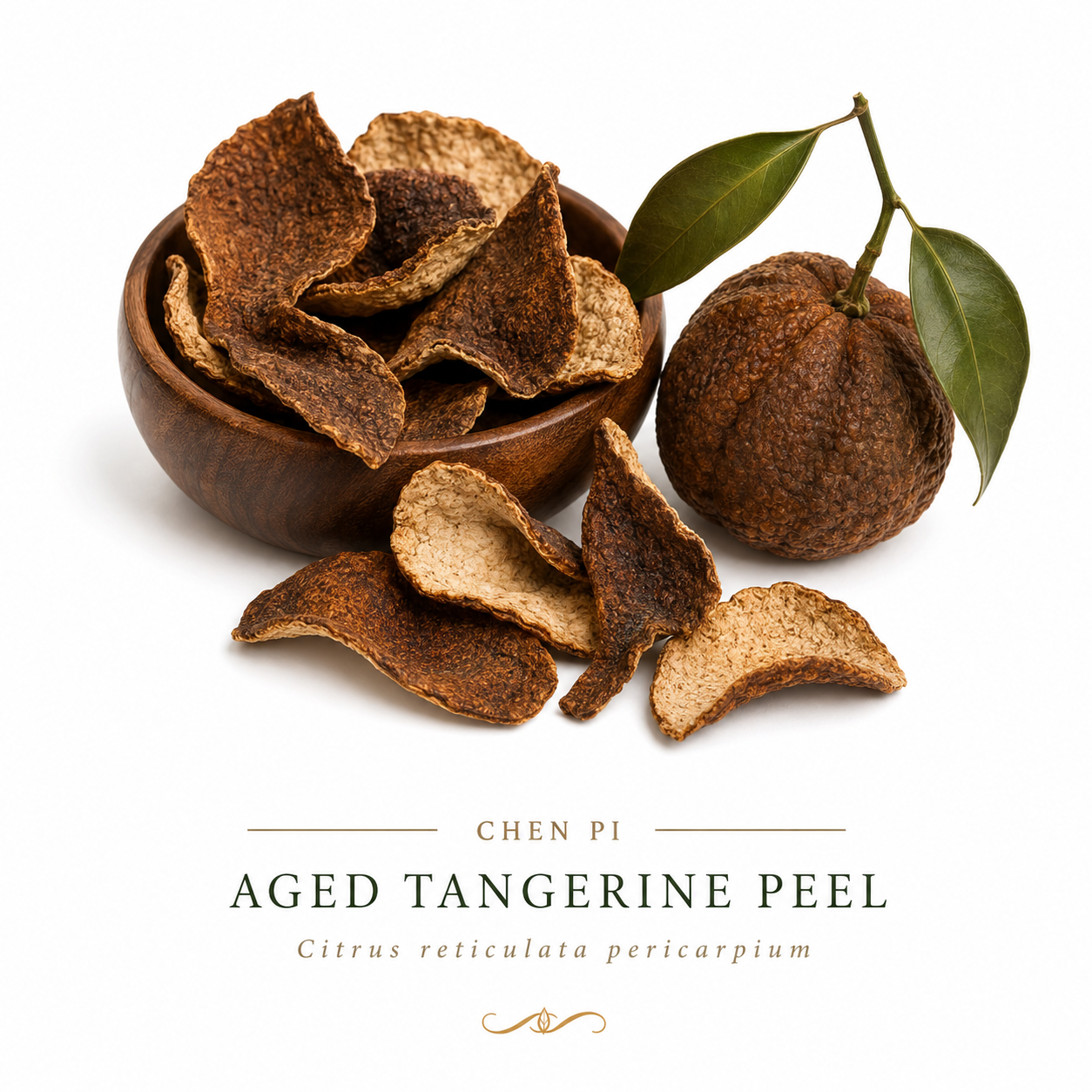 Chen Pi — Aged Tangerine Peel
Think: phlegm and heaviness.
Chen Pi traditionally regulates Qi, dries Dampness, transforms Phlegm, and supports digestion.
It's a versatile addition to a winter herbal pantry because it combines easily with other Chinese herbs.
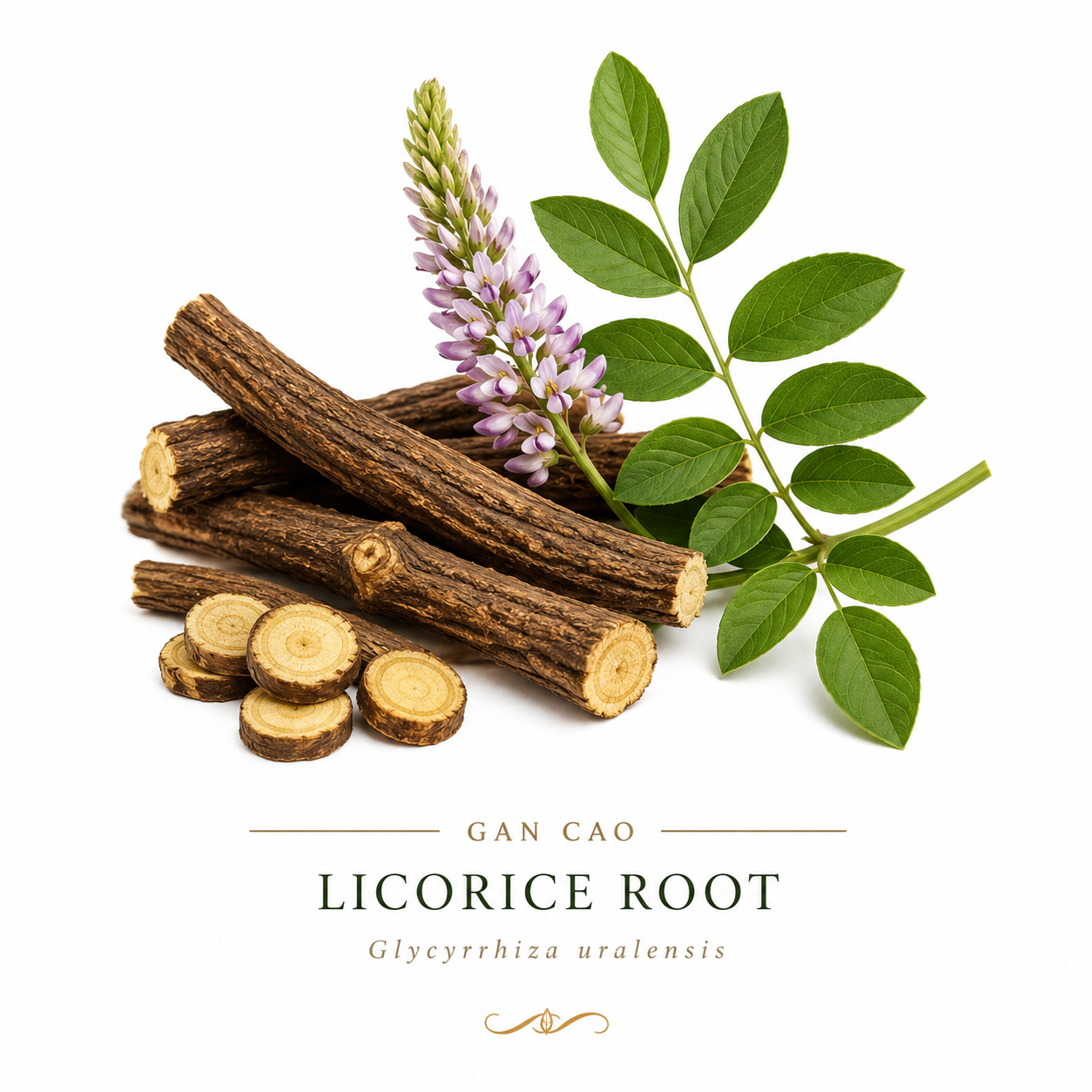 Gan Cao — Licorice Root
Think: throat comfort and herbal combinations.
Gan Cao is one of the most frequently used herbs in Chinese formulas. Traditionally, it supports the Lungs and Spleen, benefits certain types of throat and cough presentations, and harmonizes combinations of other herbs.
Licorice isn't appropriate for everyone, particularly in significant amounts. People with high blood pressure, heart or kidney problems, or those taking medications should consult a healthcare professional before using it.
One Winter Rule Worth Remembering
Chinese herbalism doesn't treat every winter complaint the same way.
Feeling cold and chilled? Think about warming herbs such as ginger.
Feeling hot, red or irritated? That's traditionally where cooling herbs such as Honeysuckle, Forsythia, and Ban Lan Gen enter the picture.
Looking for everyday traditional support? Huang Qi belongs in a different category again.
That's the real advantage of keeping a small Chinese herbal pantry: you don't need dozens of herbs—you need a few useful ones and an understanding of why they're different.
A Quick Guide to Your Winter Chinese Herbal Pantry
Keep this simple guide handy when choosing which herbs belong in your winter pantry:
Jin Yin Hua (Honeysuckle) — Traditional Heat-clearing herb; commonly associated with hot, irritated presentations.
Lian Qiao (Forsythia) — Traditionally used for Heat, Toxicity, and swelling patterns.
Ban Lan Gen (Isatis Root) — Traditionally associated with Heat and throat presentations.
Sheng Jiang (Fresh Ginger) — Warming herb traditionally used to disperse Cold.
Huang Qi (Astragalus) — Traditional Qi tonic used to support Qi and defensive Qi.
Chen Pi (Aged Tangerine Peel) — Traditionally used to regulate Qi, dry Dampness, and transform Phlegm.
Gan Cao (Licorice Root) — Versatile traditional herb frequently used to support and harmonize herbal combinations.
You don't need to use all seven. The value of a well-planned herbal pantry is having a few carefully selected herbs on hand—and understanding when each one is traditionally used.
Research & Further Reading
Interested in learning more? These PubMed resources provide additional research on several of the herbs discussed in this article.
-
Jin Yin Hua (Honeysuckle Flower) — View research on PubMed
-
Lian Qiao (Forsythia Fruit) — View research on PubMed
-
Ban Lan Gen (Isatis Root) — View research on PubMed
-
Sheng Jiang (Ginger) — View research on PubMed
-
Huang Qi (Astragalus Root) — View research on PubMed
-
Chen Pi (Aged Tangerine Peel) — View research on PubMed
-
Gan Cao (Licorice Root) — View research on PubMed
PubMed links are provided for educational purposes. Research on an herb or its constituents does not establish that the herb prevents, treats, or cures any disease.
This information is for educational purposes and describes traditional uses of Chinese herbs. These statements have not been evaluated by the FDA and are not intended to diagnose, treat, cure, or prevent disease. Consult a qualified healthcare professional before using herbs if you take medications, have a medical condition, or are pregnant or nursing.