
The Dirty Secret Behind Cheap Herbs Online
Posted by 1st Chinese Herbs Research Team. on Jun 23rd 2026
The Dirty Secret Behind Cheap Herbs Online (And Why Cheap Herbs Often Cost You More)
Let's Take A Look At All Of This!
Everyone loves a good deal.
A sale here. A coupon there. A price so low it feels almost impossible to ignore.
And when shopping for herbs online, it’s easy to think:
“Why would I pay more when this bag looks exactly the same?”
After all… it’s just an herb, right?
Well. Not exactly. Here’s the uncomfortable truth most herb companies do not want to say out loud.
Cheap herbs are not always a bargain.
Sometimes they’re the exact opposite.
Because when herbs look suspiciously cheap, someone is paying the price.
And more often than not… that someone is you.
Not always with money.
Sometimes with:
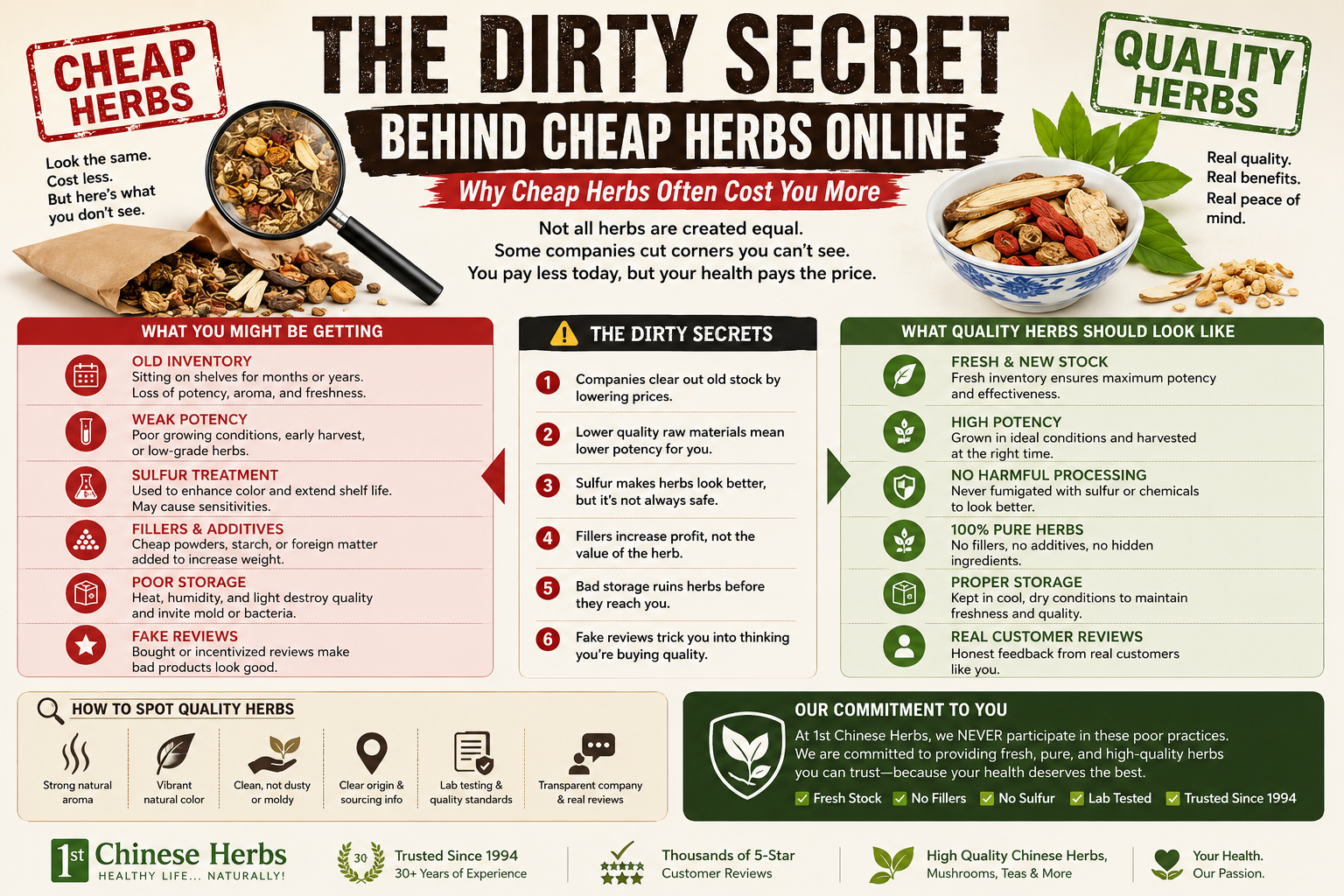
- old inventory
- weak potency
- sulfur-treated herbs
- fillers
- poor storage
- fake reviews
And here’s the part nobody talks about.
The biggest danger isn’t buying cheap herbs.
The biggest danger is buying poor-quality herbs… and blaming the herbs when they fail.
You think: “Maybe herbs just don’t work for me.”
That happens far more often than people realize.
Cheap Herbs vs Quality Herbs: What’s the Real Difference?
| Feature | Cheap Herbs | Quality Herbs |
|---|---|---|
| Freshness | Often old inventory | Fresh inventory rotation |
| Potency | Weak or inconsistent | Strong and vibrant |
| Color | Dull, faded | Rich natural color |
| Aroma | Weak or stale | Strong, fresh aroma |
| Storage | Unknown | Properly controlled |
| Ingredients | May include fillers | Transparent labeling |
| Testing | Often unclear | Lab-tested when possible |
Here’s the Scary Part: It’s Shockingly Easy to Get Fooled
This is what makes buying herbs online so tricky.
Bad herbs do not always look bad in photos.
In fact, they often look great.
- Professional product photos
- Huge discounts
- Thousands of glowing reviews
- Fancy packaging
That’s what makes this so deceptive.
You can buy poor-quality herbs and not realize it until they arrive.
Or worse... You may never realize it.
At 1st Chinese Herbs, we believe customers deserve transparency—not marketing smoke and mirrors.
1. Old Inventory: The Problem Nobody Talks About
One major reason herbs get discounted heavily is simple.
They’re old. Sometimes very old. Months old. Sometimes years old.
Old herbs often lose:
- aroma
- color
- taste
- potency
Think of herbs like coffee.
You would not buy three-year-old coffee and expect an amazing cup.
Herbs are no different.
Fresh herbs smell alive.
Old herbs smell tired.
At 1st Chinese Herbs, we do not participate in selling stale inventory. Freshness matters.
2. Weak Potency: When Herbs Look Fine but Do Very Little
Two bags of herbs can look nearly identical.
Yet one can be dramatically better.
Why?
- better growing conditions
- better harvesting
- better drying
- better storage
Potency matters.
A lot.
Good herbs feel vibrant.
Cheap herbs often feel flat.
At 1st Chinese Herbs, we prioritize potency, freshness, and quality over cheap sourcing.
3. Sulfur Treatment: The Problem Most People Never Consider
This is a big one. And almost nobody talks about it.
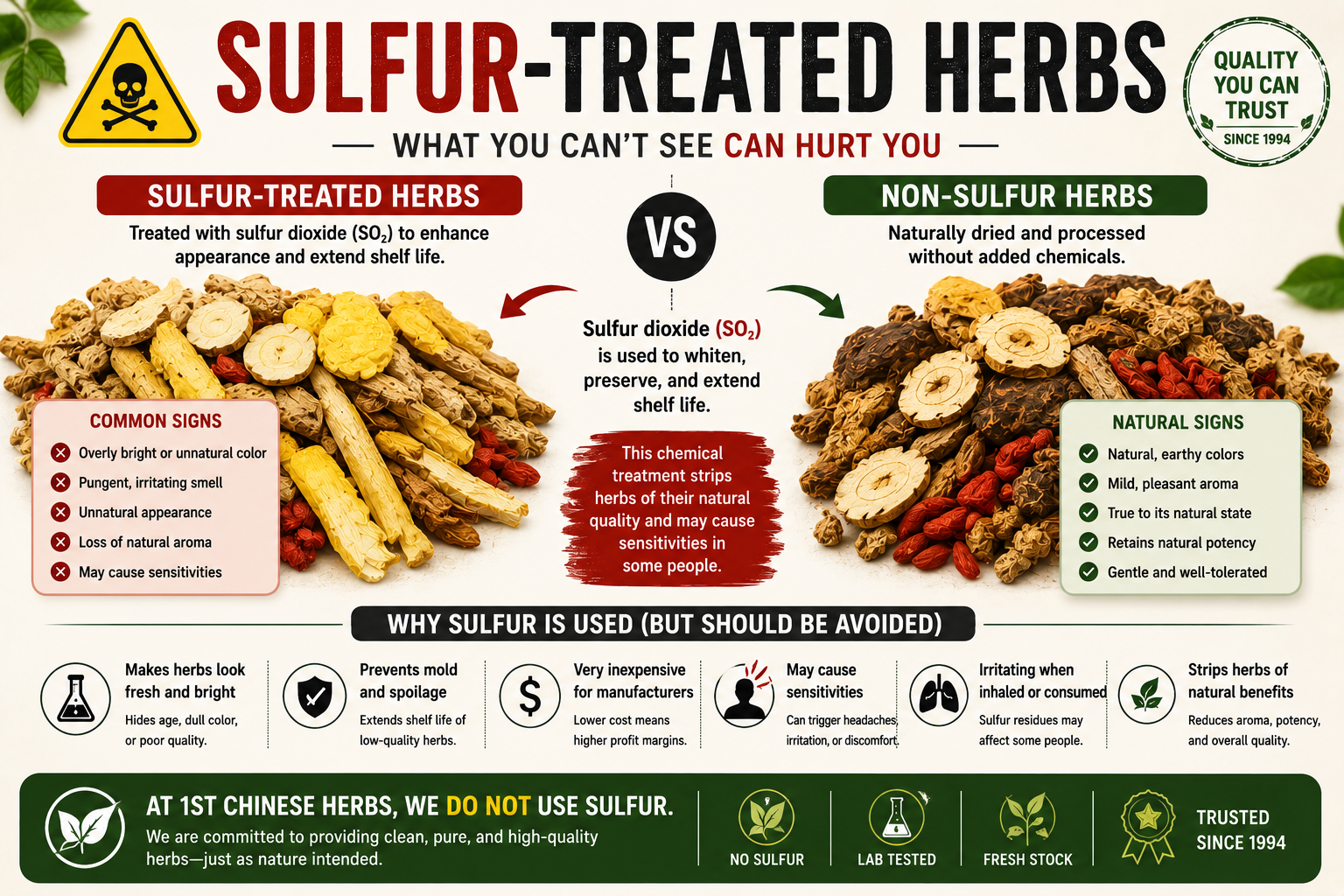
Some herbs are treated with sulfur to:
- preserve shelf life
- keep bright color
- reduce mold risk
- improve appearance
Many customers never think to ask.
But processing matters just as much as growing.
At 1st Chinese Herbs, we believe customers deserve to know how herbs are processed.
4. Fillers: Yes, This Happens Too
Especially in:
- powders
- capsules
- extracts
Sometimes what looks like 100% herb… isn’t.
It may include:
- starches
- cheap powders
- flow agents
- fillers
At 1st Chinese Herbs, we believe in transparency, not mystery ingredients.
5. Poor Storage Can Ruin Great Herbs
Even excellent herbs can be ruined.
How?
- heat
- humidity
- light exposure
- air exposure
Herbs are sensitive. Store them badly and quality drops fast.
At 1st Chinese Herbs, proper storage is essential—not optional.
6. Fake Reviews Are More Common Than You Think
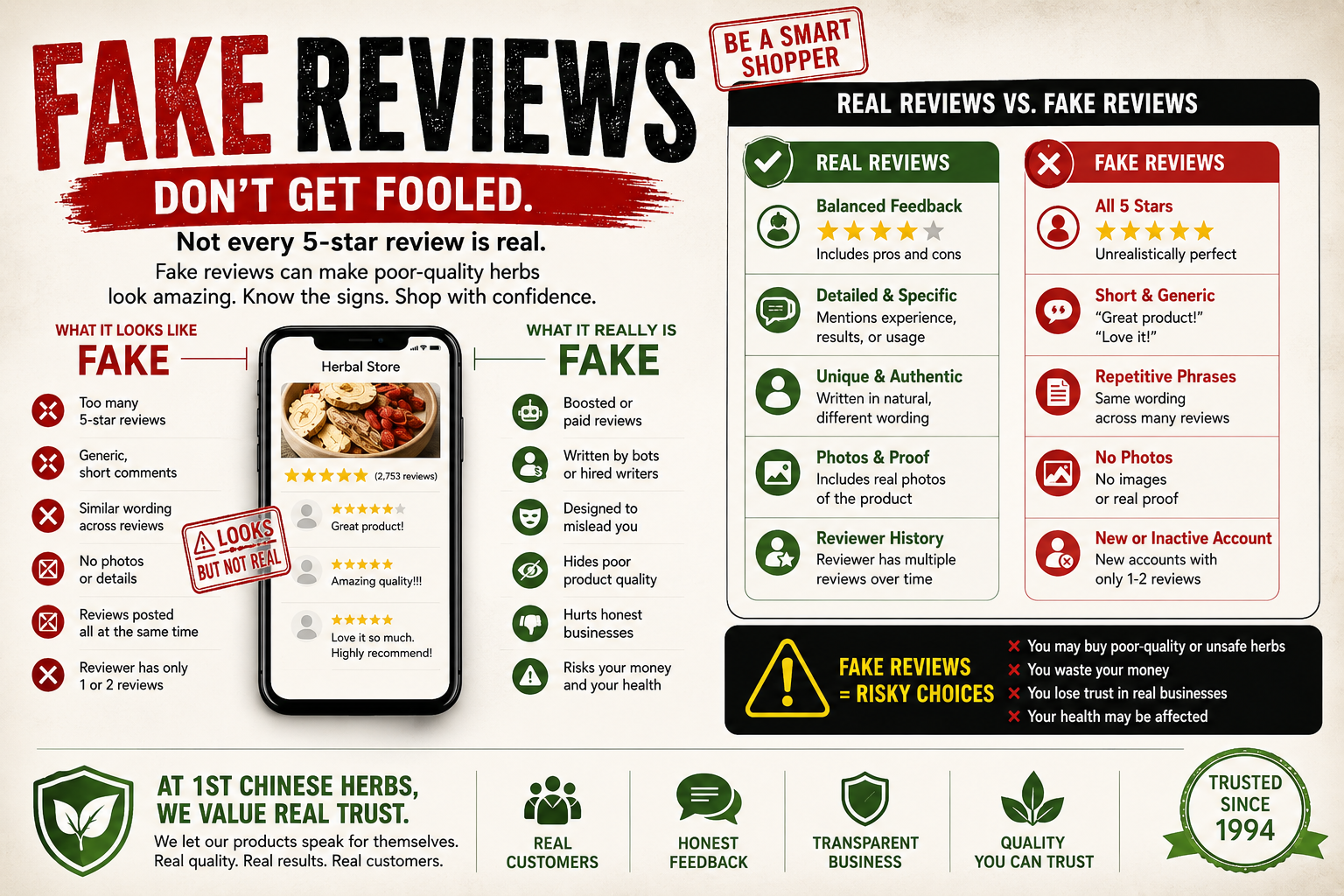
This one hurts. Because customers naturally trust reviews.
And they should—when they’re real. The problem? Not every review is genuine.
Some are:
- paid
- incentivized
- inflated
- manipulated
Five stars do not always mean five-star quality.
At 1st Chinese Herbs, trust matters more than hype.
How to Tell If You’re Getting High-Quality Herbs
Good herbs usually reveal themselves quickly.
Look for these signs:
- Strong natural aroma
- Rich natural color
- Fresh smell
- Minimal dust or debris
- Clear sourcing information
- Transparent ingredient lists
Ask yourself:
- Does this herb smell alive?
- Does it look vibrant?
- Does the company explain sourcing?
- Do they discuss quality testing?
If yes, you’re likely looking at much better herbs.
So How Do You Buy Better Herbs?
- Choose trusted suppliers
- Look for freshness
- Check sourcing
- Read beyond reviews
- Ask questions
The right company welcomes questions.
The wrong company avoids them.
The Real Bottom Line
Cheap herbs are not always bad.
But extremely cheap herbs should make you pause and ask one simple question:
Why?
Because with herbs, what you cannot see matters just as much as what you can.
Freshness. Origin. Storage. Potency. Processing.
It all matters.
Buying herbs should never be about price alone.
It should be about trust.
At 1st Chinese Herbs, we’ve believed that since 1994.
Because better herbs create better outcomes.
And your wellness journey deserves better than cheap shortcuts.
Frequently Asked Questions About Cheap Herbs
Are cheap herbs always bad?
No. Cheap herbs are not always bad. But extremely cheap herbs should raise questions about freshness, potency, sourcing, and storage.
How can I tell if herbs are fresh?
Fresh herbs usually have strong aroma, vibrant color, and better taste. Old herbs often smell weak, stale, or dusty.
Are expensive herbs always better?
Not always. Price alone does not guarantee quality. The best indicators are freshness, sourcing, testing, and transparency.
About the Author
Sarah Johnson
Certified Herbalist | Founder, 1st Chinese Herbs
Trusted Since 1994
For more than 30 years, Sarah has helped customers choose high-quality Chinese herbs, roots, mushrooms, berries, teas, and botanical wellness products with confidence.
7 Red Flags to Watch for When Buying Herbs Online
- Prices that seem too good to be true
- No mention of testing
- No sourcing information
- Vague product descriptions
- No freshness discussion
- Too many suspicious reviews
- No real company story
What Research Says About Herb Quality
Modern research supports what experienced herbal buyers have known for years: herb quality matters.
Freshness, proper sourcing, storage, testing, and processing all affect the final product.
Here are several studies highlighting why quality control matters when buying herbs online.
1. Heavy Metals in Herbal Products
Studies have found that some herbal products may contain concerning levels of heavy metals such as lead, arsenic, cadmium, and mercury when sourcing and testing standards are poor.
2. Herbal Product Adulteration Is a Global Problem
Research has shown that herbal products are sometimes adulterated, substituted, or contaminated, making transparency and quality testing essential.
3. Quality Control in Herbal Medicine Matters
Modern herbal research emphasizes that authentication, testing, and quality control are critical for maintaining consistency and product integrity.
4. Contamination and Mislabeling in Herbal Products
Studies continue to show that contamination and inaccurate labeling remain major concerns in the herbal supplement market.
5. Why Authentication of Herbs Matters
Researchers emphasize that proper botanical identification and authentication are essential for ensuring product quality and protecting consumers.