
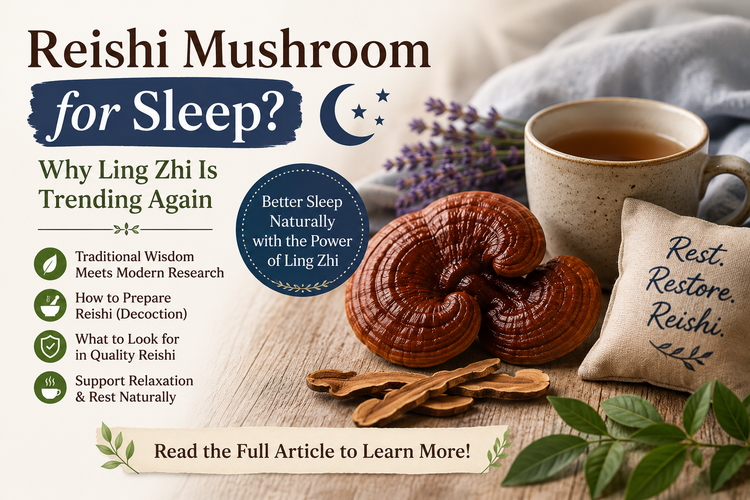
Reishi Mushroom for Sleep?
Posted by 1st Chinese Herbs Research Team. on Aug 17th 2026
Reishi Mushroom for Sleep?
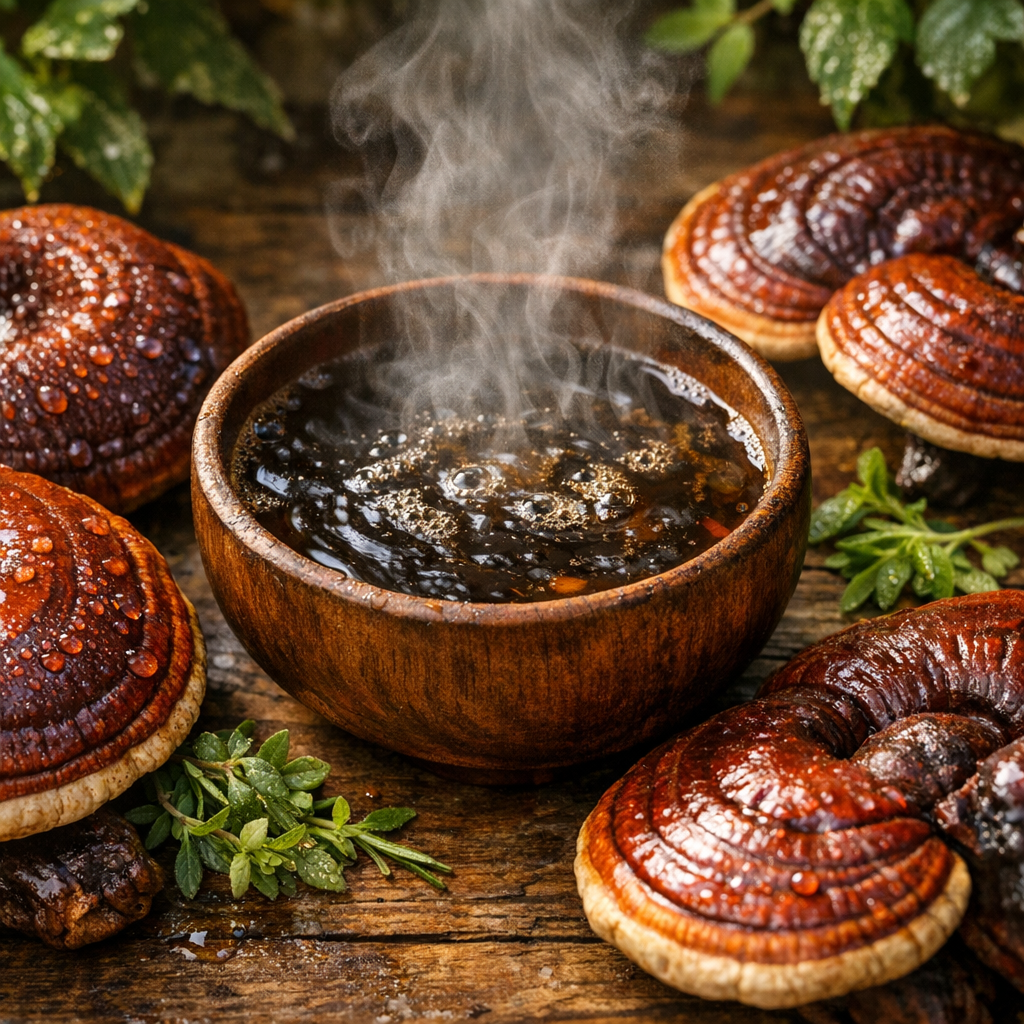 Reishi mushroom seems to be everywhere lately—from mushroom coffees and wellness powders to conversations about evening routines, relaxation, and sleep. But Reishi is hardly new.
Known as Ling Zhi (灵芝) in Chinese herbalism and commonly associated with Ganoderma species, Reishi has a long history of traditional use in China. Today, renewed interest in mushrooms and natural wellness has brought this remarkable fungus back into the spotlight.
What Is Reishi Mushroom?
Reishi is a distinctive woody mushroom traditionally valued in Chinese herbal practice. Unlike culinary mushrooms, Reishi is tough and bitter and is generally prepared as a decoction, powder, or concentrated extract rather than eaten as food.
Its long history of use is one reason Reishi continues to attract both traditional herbalists and modern researchers.
Why Are People Interested in Reishi for Sleep?
In Traditional Chinese Medicine, Ling Zhi has historically been associated with calming the Shen—a traditional concept often translated as the spirit or mind.
This traditional connection to restlessness and calming practices helps explain why Reishi frequently appears today in discussions about nighttime wellness and relaxation.
Modern researchers have also investigated Reishi and sleep. Some laboratory and animal research has produced interesting findings involving sleep duration and possible biological mechanisms. However, this is important: research specifically demonstrating that Reishi improves insomnia or sleep in humans is still limited.
Reishi Isn't a Typical Bedtime Tea
If you're imagining a delicate cup of mushroom tea before bed, Reishi may surprise you.
Reishi is naturally quite bitter. The mushroom is also woody and tough, so sliced Reishi is commonly simmered rather than simply steeped for a few minutes like an ordinary tea bag.
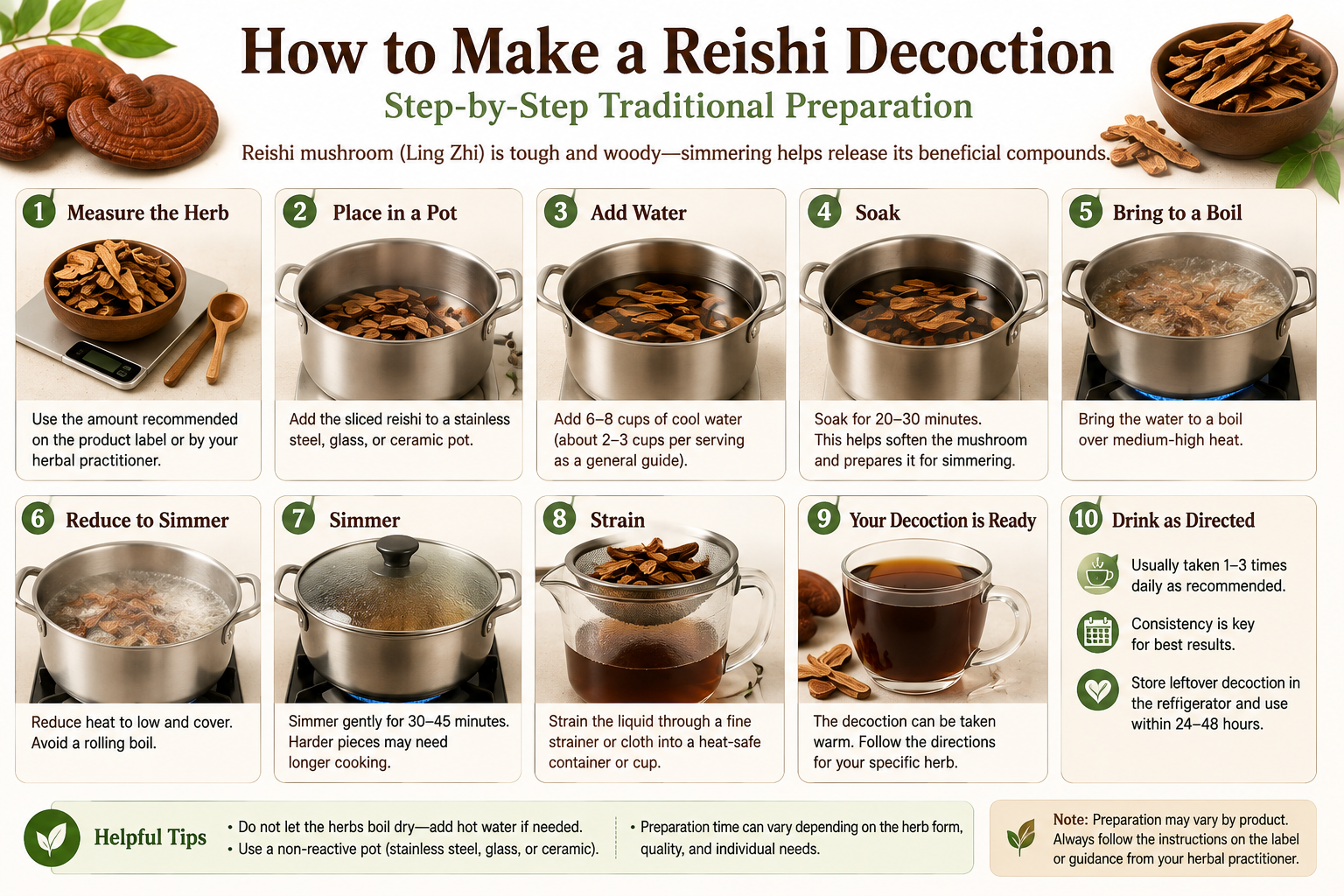
Simple Reishi Decoction
- Place sliced Reishi in a stainless-steel, glass, or ceramic pot.
- Add water according to the product directions.
- Bring the water to a gentle boil.
- Reduce the heat and simmer.
- Strain the mushroom pieces before drinking.
Preparation instructions can vary depending on the product and form, so always follow the directions provided with your Reishi.
Whole, Powdered or Extract Reishi?
There isn't one form that's right for everyone.
Whole or sliced Reishi is a good choice for people who enjoy traditional decoctions and want to see the actual mushroom material.
Reishi powder offers convenience for customers who prefer a finely milled herbal product.
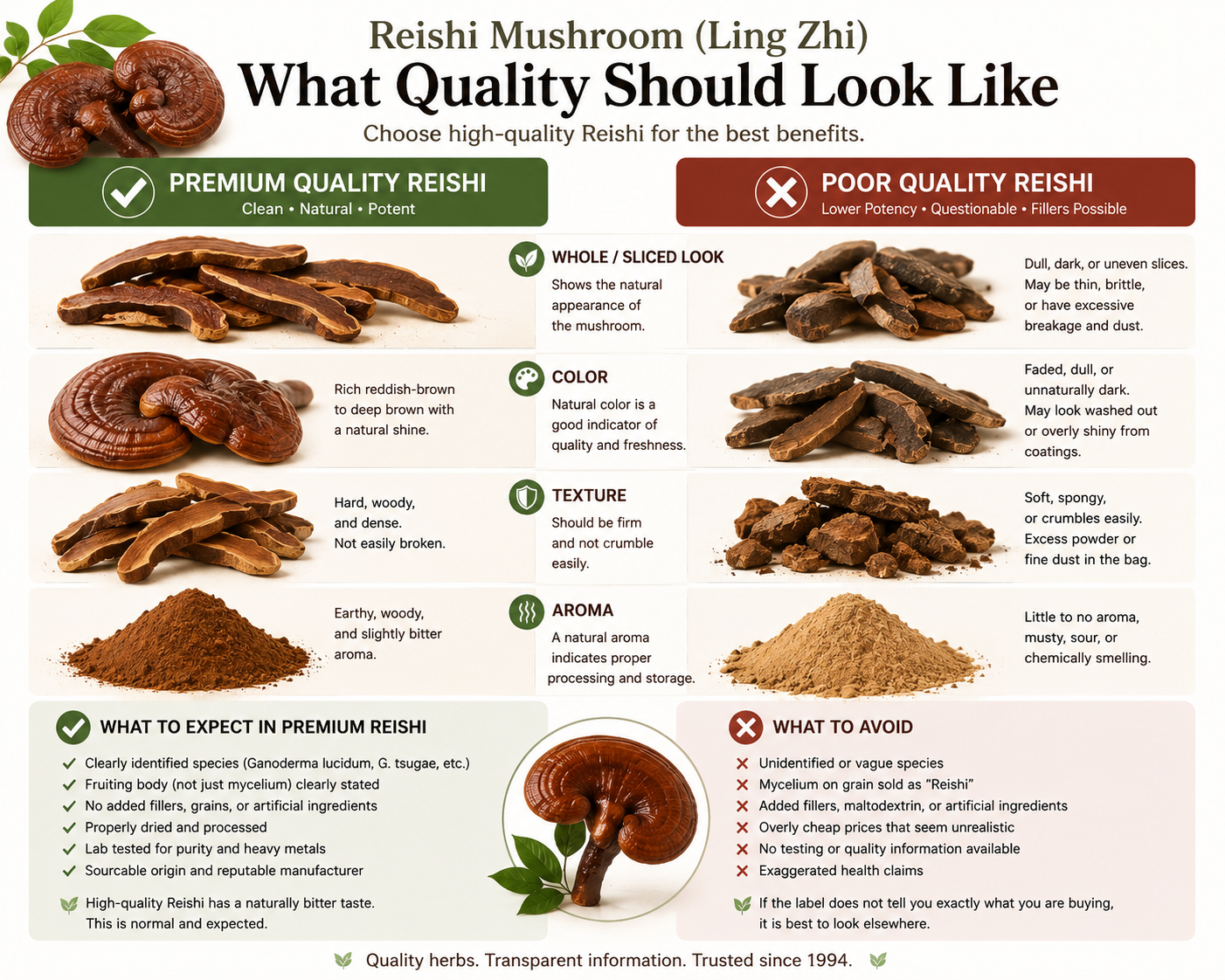
Reishi extracts provide another convenient option and may be considerably more concentrated than ordinary mushroom powder. When comparing extracts, pay attention to the species, extraction method, concentration and manufacturer's directions rather than assuming all Reishi powders are equivalent.
An Ancient Mushroom in a Modern Wellness World
Reishi may be trending today, but Ling Zhi has been part of Chinese herbal tradition for centuries. That's what makes the current interest so fascinating: an ancient mushroom is being rediscovered by a new generation interested in traditional herbs, mushrooms, relaxation, and nighttime wellness routines.
Modern science is beginning to investigate some of these traditional uses, but there is still much to learn—especially about Reishi and human sleep.
Sometimes the most interesting wellness trends aren't new at all.
References
- Ling Zhi – Traditional Use & Research
- Reishi Mushroom & Sleep Research
- Reishi & Sleep Mechanisms Research
- Modern Reishi Research Review
This article is for educational purposes only. Reishi and other herbal products are not intended to diagnose, treat, cure, or prevent insomnia or any other disease. Consult a qualified healthcare professional before using herbal products, particularly if you take medications, are pregnant or nursing, or have a medical condition.