
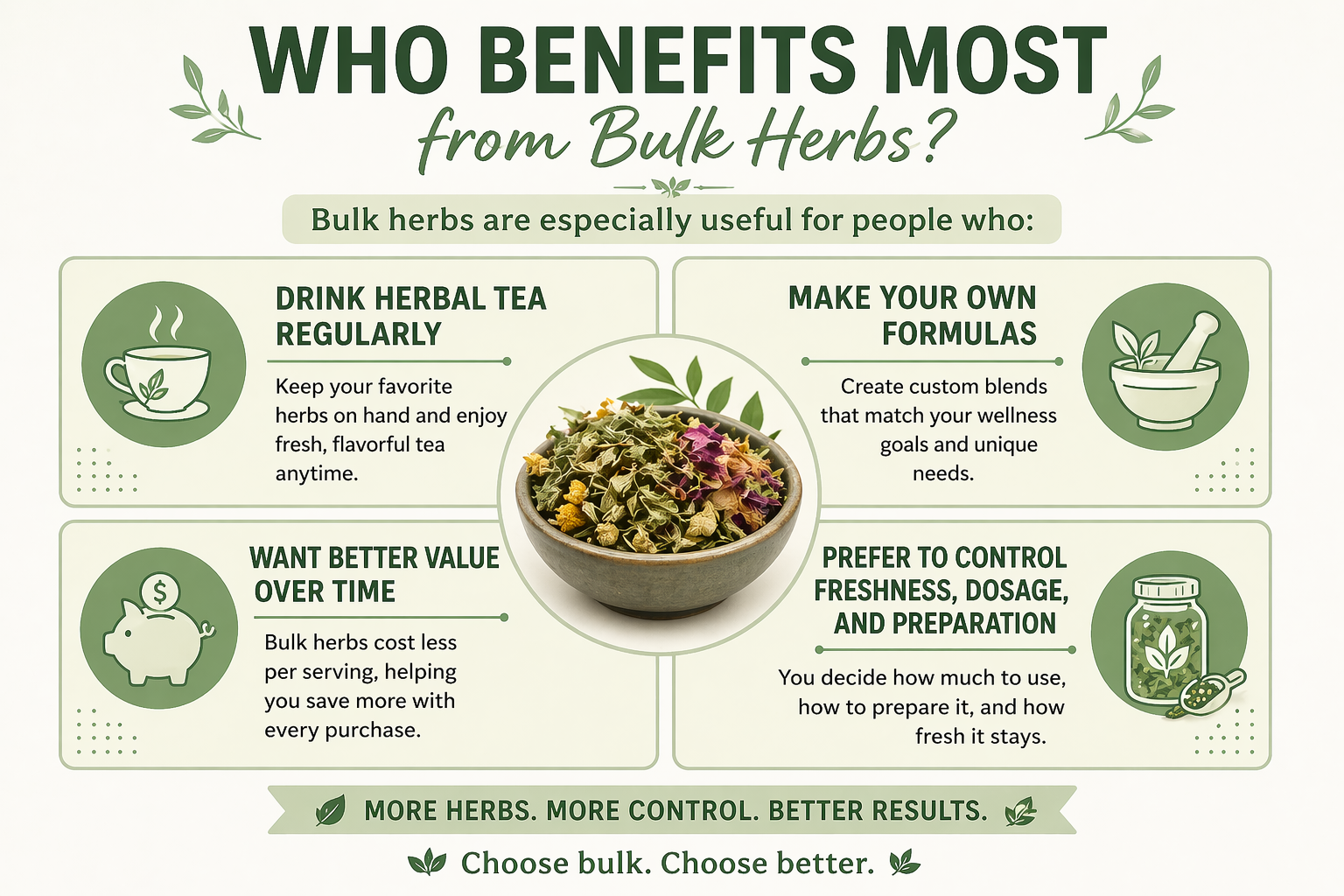
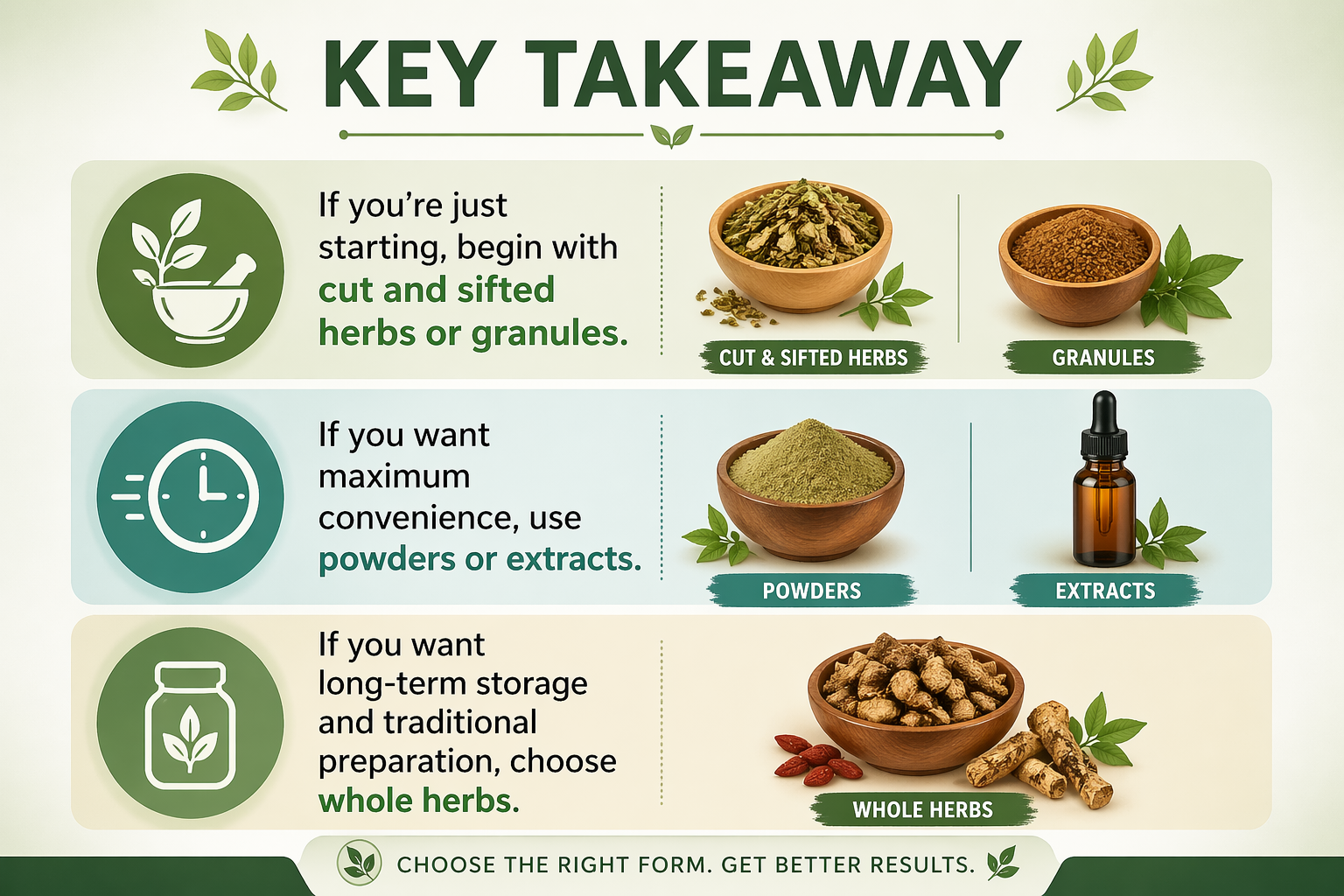
Home > Bulk Herbs > Bulk Herbs Guide Most people do not overspend on herbs because herbs are too expensive. They overspend because they buy herbs in the least efficient format. Small pre-packed herbs may look simple, but they usually cost more per ounce, run out faster, and limit how you can use them. Bulk herbs solve those problems by giving you more herb, more flexibility, and better long-term value. This guide explains what bulk herbs are, the different forms they come in, how to choose the right type for your needs, how to store them correctly, and how to use them with more confidence. If you are new to bulk herbs, begin with herbs that are easy to prepare, easy to understand, and easy to use consistently. Bulk herbs are herbs sold in larger quantities instead of small retail bags or single-use servings. On herbal websites, “bulk” usually means practical quantities such as 3 ounces, 8 ounces, 1 pound, or more—not oversized warehouse-style packaging. The real advantage is not just quantity. It is value. When you buy herbs in bulk, you usually reduce the cost per ounce, reduce repeated packaging costs, and give yourself more freedom to brew tea, make decoctions, prepare recipes, fill capsules, or create your own blends. Bulk herbs are especially useful for people who: Not all bulk herbs are the same. The form of the herb changes how you use it, how long it lasts, and how much preparation it requires. Choosing the right form is one of the biggest factors in whether herbs feel practical or frustrating. Best for: long shelf life, traditional preparation, long-term storage Whole herbs are the least processed form. They are often roots, bark, berries, seeds, or larger leaves and flowers kept closer to their original state. Why choose them: They store well, feel traditional, and often appeal to people who want minimal processing. Trade-offs: They usually take the most preparation time and may need cutting, crushing, or simmering. Best for: teas, decoctions, daily brewing Cut and sifted herbs are chopped into smaller, uniform pieces to make measuring and brewing easier. Why choose them: They are one of the most practical forms for most people because they extract well, are easier to measure, and work beautifully in tea blends. Trade-offs: They still require brewing time and generally have a slightly shorter shelf life than whole herbs. Best for: convenience, capsules, smoothies, recipes Powdered herbs are finely ground and ready to use without steeping or simmering. Why choose them: They are flexible, quick, and especially useful for people making their own capsules or adding herbs to drinks and foods. Trade-offs: They can taste stronger, clump if stored poorly, and may leave sediment in drinks. Best for: fast preparation, easy dosing, travel Granules are concentrated extracts that dissolve in hot water, giving you a fast tea-like preparation without long brewing. Why choose them: They are one of the easiest ways to take herbs quickly and consistently. Trade-offs: They are less customizable than raw herbs and are more processed. Best for: potency, convenience, concentrated use Extracts are concentrated herbal preparations designed to deliver more active material in a smaller amount. Why choose them: They are efficient, simple, and useful for people who want stronger concentration without preparing raw herbs. Trade-offs: They usually cost more per unit and feel less traditional than brewing whole or cut herbs. If you’re just starting, begin with cut and sifted herbs or granules. If you want maximum convenience, use powders or extracts. If you want long-term storage and traditional preparation, choose whole herbs. One of the biggest advantages of bulk herbs is cost efficiency. When you buy small herb packages, you usually pay extra for repeated packaging, repeated labels, and repeated shipping weight. Bulk herbs reduce those repeated costs. They also make it easier to: For people who use herbs regularly, the savings compound over time. That is one reason bulk herbs are popular with home herbal users, tea makers, practitioners, and anyone building a more intentional herbal routine. The part of the plant and the form of the herb both affect how it should be prepared. This matters because the wrong preparation method can waste time and produce disappointing results. Delicate leaves can lose quality when overcooked, while dense roots may remain under-extracted if they are only briefly steeped. Bulk herbs last best when they are protected from the three main problems: heat, moisture, and light. Quality is where many people either gain confidence or lose it. Good herbs should not just look acceptable—they should be clearly identified, properly handled, and backed by transparent quality standards. This is one of the biggest differences between a low-trust herb store and a serious herb company. A simple starter set makes it easier to begin without overwhelm. Bulk herbs are herbs sold in larger quantities at a lower cost per use than small retail packages. Granules and extracts are usually the easiest because they require little or no preparation. Powders are also convenient for capsules and recipes. Cut and sifted herbs are herbs chopped into smaller, more uniform pieces so they are easier to measure and brew. They serve different purposes. Powders are convenient and flexible, while whole herbs are better for long-term storage and traditional preparation. That depends on the form and storage conditions, but many bulk herbs can last from 2 to 4 years or longer when stored properly. Bulk herbs give you more control, more flexibility, and better value over time. Once you understand how to choose the right form and prepare it correctly, herbs become much easier to use consistently.Bulk Herbs Explained: What They Are, How to Use Them, Store Them, and Save More
Start Here: Best Beginner Bulk Herbs
What Are Bulk Herbs?
Types of Bulk Herbs Explained
Whole Herbs
Cut & Sifted (C/S)
Powders
Granules
Extracts
Quick Comparison Guide
Form
Best For
Prep Time
Shelf Life
Ease of Use
Whole
Storage, traditional use
High
Very Long
Lower
Cut & Sifted
Tea, decoction
Medium
Long
Medium
Powder
Convenience, capsules
None
Medium
High
Granules
Quick tea
Very Low
Medium
Very High
Extracts
Potency
None
Medium
Very High
Key Takeaway
Why Bulk Herbs Save You Money
How to Use Bulk Herbs Correctly
Common Mistakes to Avoid
How to Store Bulk Herbs for Freshness
Powders: about 2 years
Cut herbs: often 3–4 years
Whole herbs: often longer when stored properlyHow to Choose High-Quality Bulk Herbs
Beginner Bulk Herb Starter Idea
Frequently Asked Questions About Bulk Herbs
What are bulk herbs?
Which form of herbs is easiest to use?
What does cut and sifted mean?
Do powdered herbs work as well as whole herbs?
How long do bulk herbs last?
Start Using Bulk Herbs the Smarter Way